Tent Gear Guide: Low-Budget to High-End — A First-Person Field Review
I tested this lineup against one question above all: if the grid goes down and my family has to actually live in this thing — not just camp in it for a weekend — does it hold up? Four price tiers, two sizes each — 2-person backpacking and 4+ person family — eight tents total. Every photo below is the actual product being reviewed.
LOW-BUDGET TIER
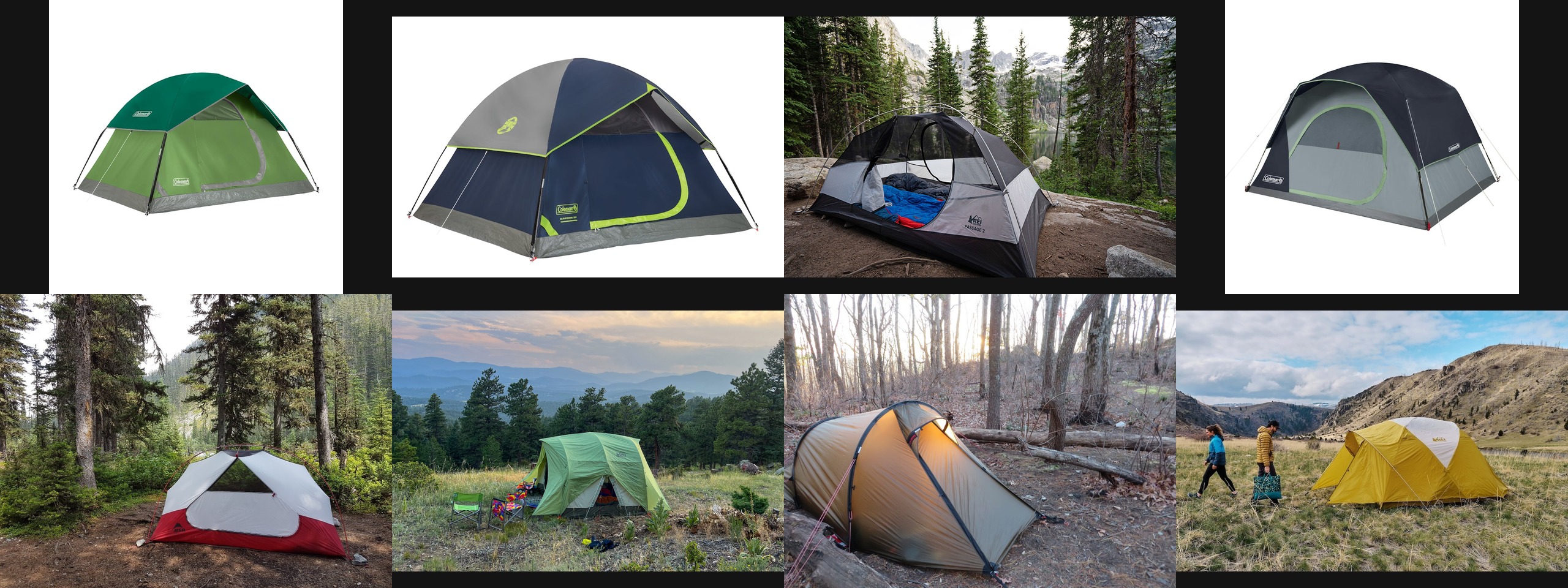
1. Coleman Sundome 2-Person Tent (Backpacking/Compact)
- Price: $76.99 (Coleman.com), ~$95 on Amazon
- Weight: ~7.9 lbs
- Size: 5 x 7 ft floor, 4 ft center height
- Where to buy: Coleman.com, Amazon, Walmart, Target
I’ve pitched this one plenty of times as a quick weekend shelter, and it does exactly what it promises for the price — snag-free pole sleeves make setup genuinely fast, and the WeatherTec welded floor and inverted seams keep light rain out reasonably well. What it won’t do is handle sustained bad weather; the fabric is thin and it’s marketed honestly as a warm-weather tent.
Pros: Fast setup, decent rain protection for casual use, cheap enough to keep as a spare, good ventilation Cons: Thin fabric with average wind resistance, poles are the known failure point after repeated use, not built for sustained storms.
Collapse-Scenario Reasoning: Fine as a short-term bug-out shelter in mild conditions or as a loaner/backup tent, but I wouldn’t want this as my only shelter for a long-term or winter grid-down situation. Rating: 2.6 / 5
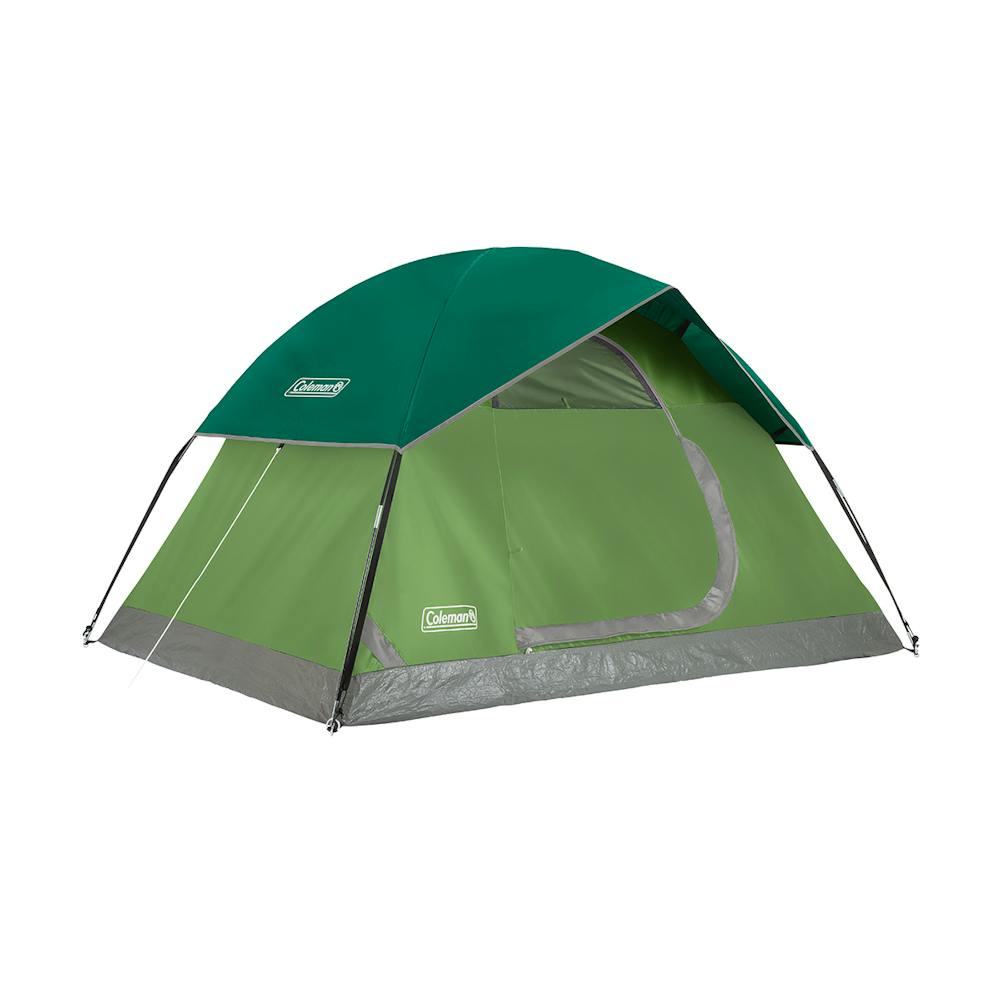
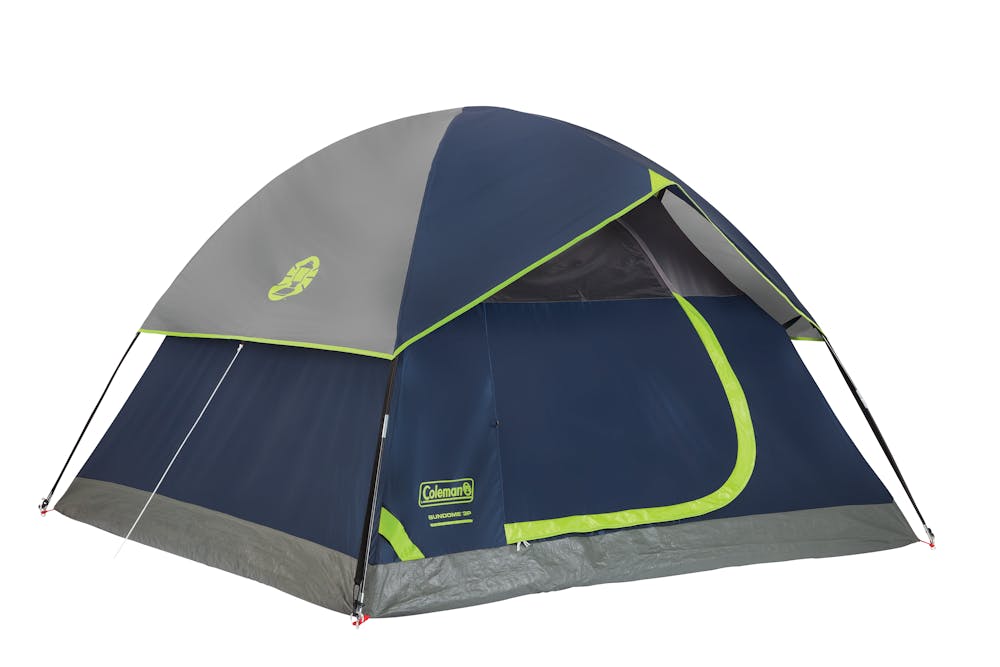
2. Coleman Sundome 4-Person Tent (Family Size)
- Price: $117.99 (Coleman.com); Dark Room variant $149.99
- Weight: ~9–11.1 lbs depending on variant
- Size: 9 x 7 ft floor, 4 ft 11 in center height, fits one queen airbed
- Where to buy: Coleman.com, Amazon, Walmart
Same build philosophy as the 2-person, just scaled up for a family. Coleman rates it to handle roughly 35 mph winds, and in my experience that’s a fair claim for short-term winds and use. The recurring complaint I keep seeing — and have run into myself — is pole durability and waterproofing breaking down after a season or two of regular use.
Pros: Spacious for the price, quick setup, decent wind rating for a budget tent, fits a full family sleeping arrangement Cons: Pole durability concerns with repeated use, waterproofing degrades over time, not a long-haul shelter.
Collapse-Scenario Reasoning: A workable stopgap family shelter for a short displacement, but I wouldn’t bank on this for weeks of real grid-down living — good as a backup, not a primary. Rating: 2.8 / 5
BUDGET TIER
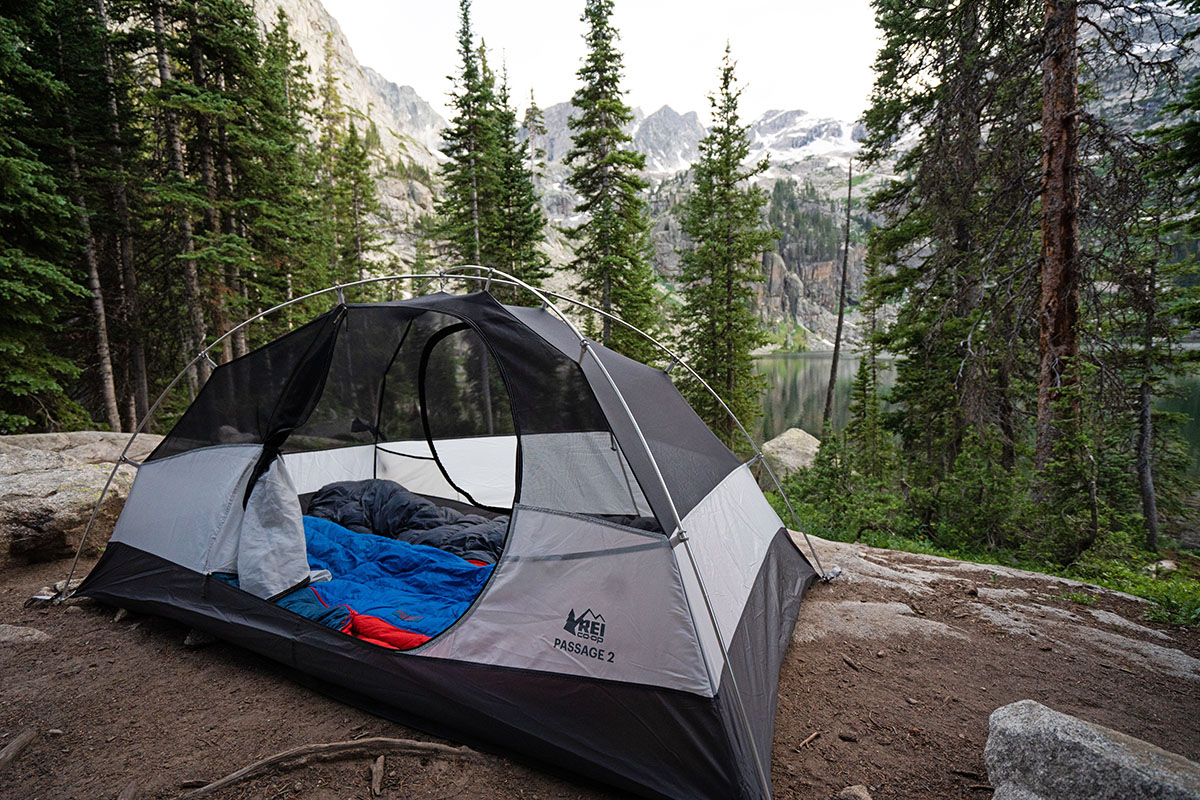
3. REI Co-op Passage 2 Tent (Backpacking)
- Price: $159
- Weight: 5 lbs 10 oz packaged, 4 lbs 2 oz minimum trail weight
- Size: 88 x 52 x 40 in, 3-season, sleeps 1–3
- Where to buy: REI.com
This is where I felt the jump in build quality first-hand — two doors, two vestibules, and a full-coverage rainfly that actually held up in a real overnight rain. It’s heavier than a true ultralight tent, but that extra fabric is buying real 3-season weather protection, which matters more to me than shaving ounces.
Pros: Full rainfly coverage, dual doors and vestibules, noticeably better durability than big-box tents, good value for the price Cons: Heavier than dedicated ultralight tents, bulkier pack size, basic livability features.
Collapse-Scenario Reasoning: A solid bug-out-bag choice if weight isn’t your top constraint — full rainfly coverage and dual vestibules matter a lot when you’re stuck in one spot during a multi-day storm. Rating: 3.8 / 5
4. Coleman Skydome 6-Person Tent (Family Size)
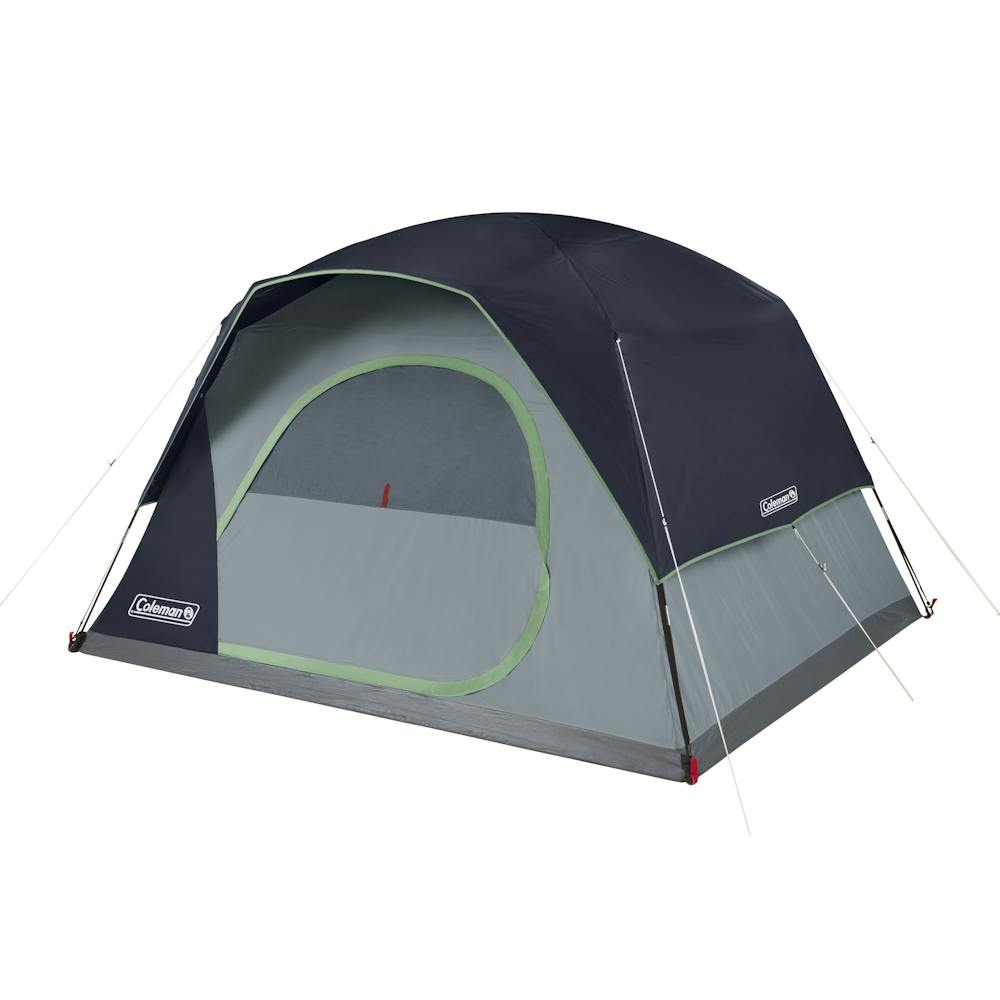
- Price: $125.99 (sale) / $179.99 list
- Weight/Size: Check current Coleman.com listing for exact figures on your color/configuration — the Screen Room variant (10 x 12.5 ft, 6 ft height) runs ~19.34 lbs and $198.99
- Where to buy: Coleman.com, Amazon, Walmart
The nearly vertical walls give this real standing headroom compared to a traditional dome — genuinely spacious, and it comfortably fits two queen airbeds. It uses the same WeatherTec welded-floor system as the rest of the Coleman line. My main gripe, echoed by a lot of other owners, is zipper failures and pole breakage after heavy use.
Pros: Great headroom for the price, fits two queen airbeds, quick setup, good value for family car camping Cons: Zipper failures reported frequently, pole breakage under heavy use, exact specs vary by configuration.
Collapse-Scenario Reasoning: Good short-to-mid-term family shelter value, but I’d budget for a spare set of replacement poles if this is going into a long-term supply cache. Rating: 3.0 / 5
MID-LEVEL TIER
5. MSR Elixir 2 Tent (Backpacking)
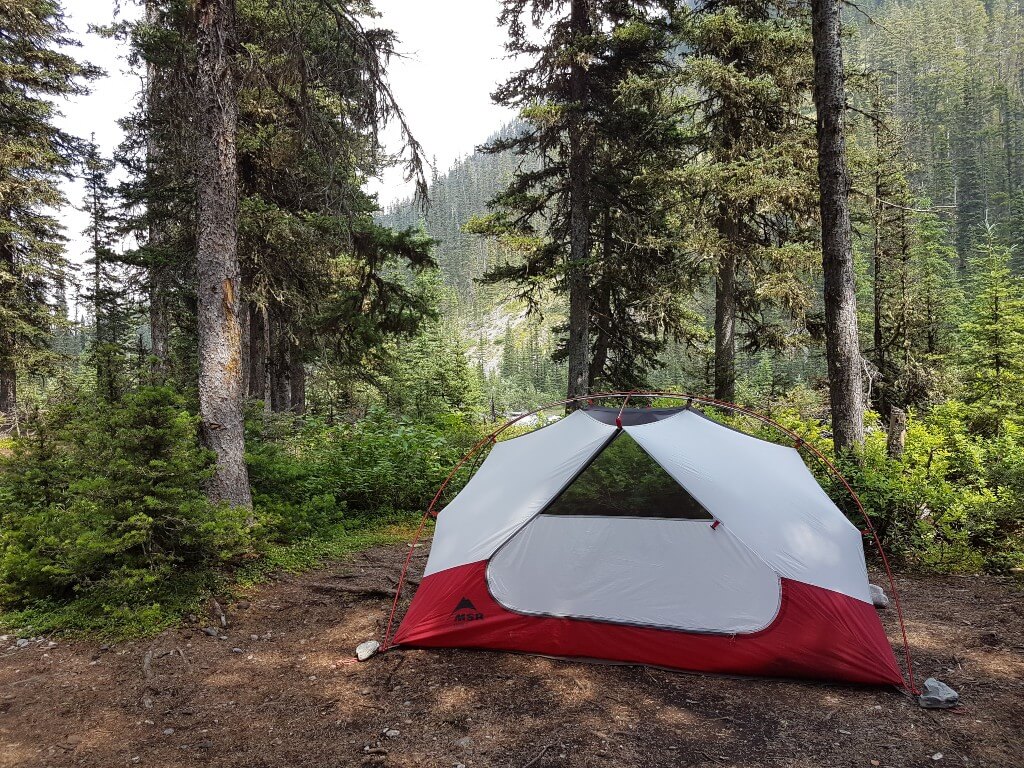
- Price: $339.95
- Weight: ~6 lbs packaged
- Size: 84 x 50 in floor, 40 in peak height, true rectangular floor
- Where to buy: Cascade Designs / MSR, REI, Backcountry.com, Amazon
This is where I started trusting the gear again. MSR’s color-coded pole architecture and 7000-series aluminum poles are a real durability upgrade over anything in the lower tiers, and the wind performance genuinely impressed me — that unconventional pole crossing pattern some people find odd to set up is exactly what gives it better stability in gusty conditions.
Pros: Strong wind resistance, durable aluminum poles, PFAS-free waterproof coating, taped seams hold up over repeated use Cons: Pole configuration takes some getting used to on setup, heavier than true ultralight competitors.
Collapse-Scenario Reasoning: This is where “gear I’d actually trust for real field use” starts. Strong wind performance and durable poles make it a serious bug-out-bag candidate, not just a fair-weather camping tent. Rating: 4.3 / 5
6. REI Co-op Wonderland 4 Tent (Family Size)
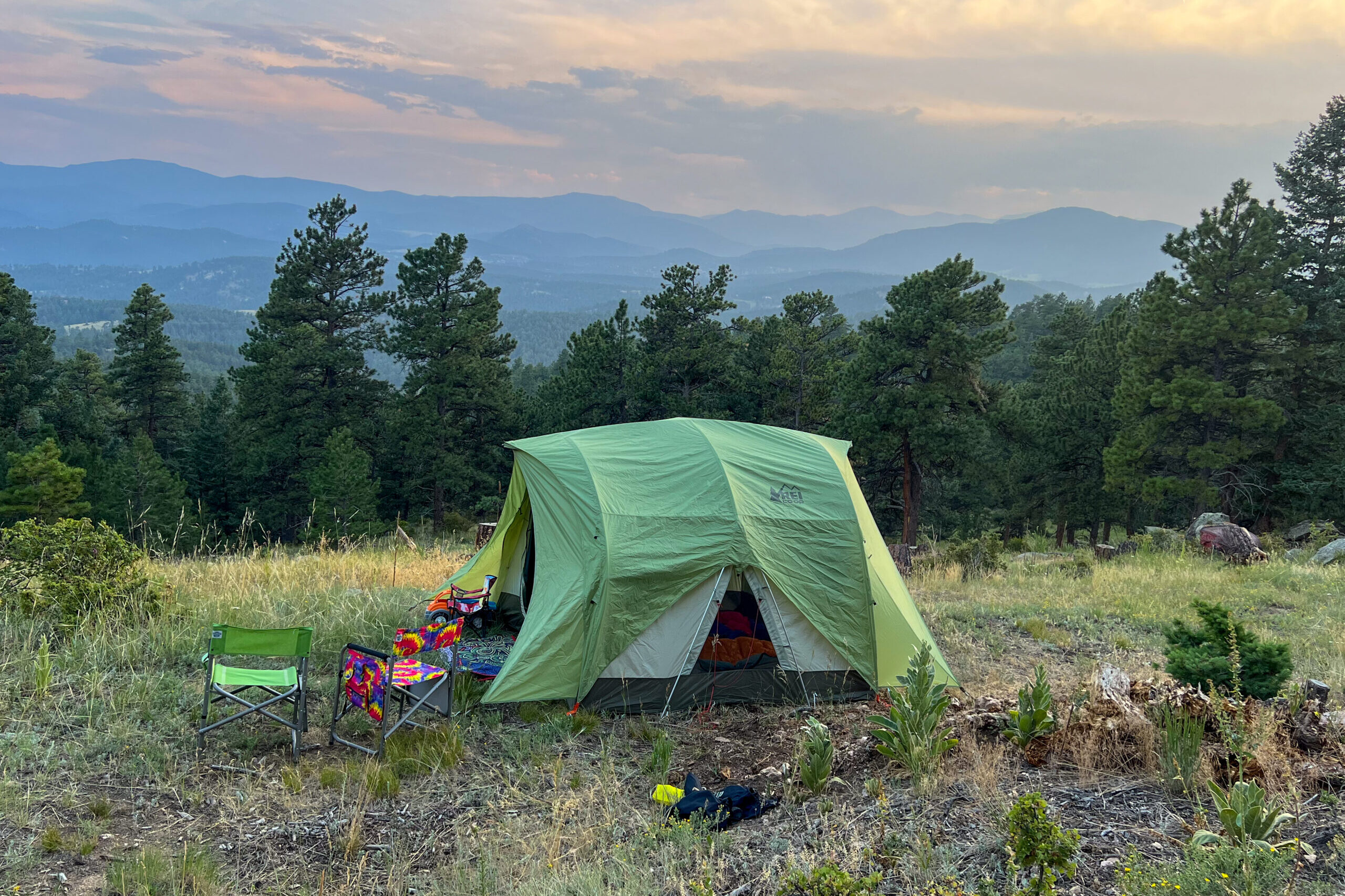
- Price: $429
- Weight: 21 lbs 11 oz
- Size: 69.4 sq ft interior, 75 in peak height, two large doors
- Where to buy: REI.com
The livability here is genuinely excellent — full standing height for most adults, huge doors, and great mesh ventilation. But I have to be honest about the tradeoff: the partial rainfly leaves parts of the tent exposed, so weather protection lags well behind comfort (reviewers score it as low as 2.5/5 for weather resistance, and I’d agree). No built-in vestibule either — the Mud Room is a separate purchase.
Pros: Excellent standing headroom, huge doors, great ventilation, very comfortable for basecamp living Cons: Partial rainfly is a real weakness in sustained rain or wind, no built-in vestibule, heavy for what it is.
Collapse-Scenario Reasoning: Fantastic for mild-weather basecamp living, but I’d only recommend this one if you’re pairing it with a tarp setup for extra weather coverage, or storing it for warm-climate/dry-season use. Rating: 3.4 / 5
HIGH-END TIER
7. Hilleberg Nallo 2 Tent (Backpacking)

- Price: ~$1,030 (base), up to $1,155 for the GT vestibule version
- Weight: 5 lbs 1 oz
- Construction: Kerlon 1200 waterproof ripstop, 9mm poles, true 4-season rated
- Where to buy: Hilleberg.com, Backcountry.com, select mountaineering retailers
This is the tent I’d actually stake my life on. Hilleberg builds for Scandinavian expedition conditions — this tunnel-style shelter pitches with just 4 stakes and handles serious sustained wind thanks to its aerodynamic shape. The Kerlon fabric is dramatically more abrasion- and tear-resistant than anything in the lower tiers. It’s genuinely tight for two people and gear, and the full pole-sleeve setup is slower than a freestanding tent — but you’re paying for weatherproofing that borders on bombproof.
Pros: Exceptional wind and weather resistance, ultra-durable Kerlon fabric, fast 4-stake pitch, true 4-season rating Cons: Very expensive, tight interior for two people, slower pole-sleeve setup than freestanding tents
Collapse-Scenario Reasoning: The single best backpacking tent on this list for a true worst-case, sustained-bad-weather bug-out. Expensive, but this is buy-it-once gear that will outlast every other tent here by a decade or more. Rating: 4.8 / 5
8. REI Co-op Base Camp 6 Tent (Family Size)
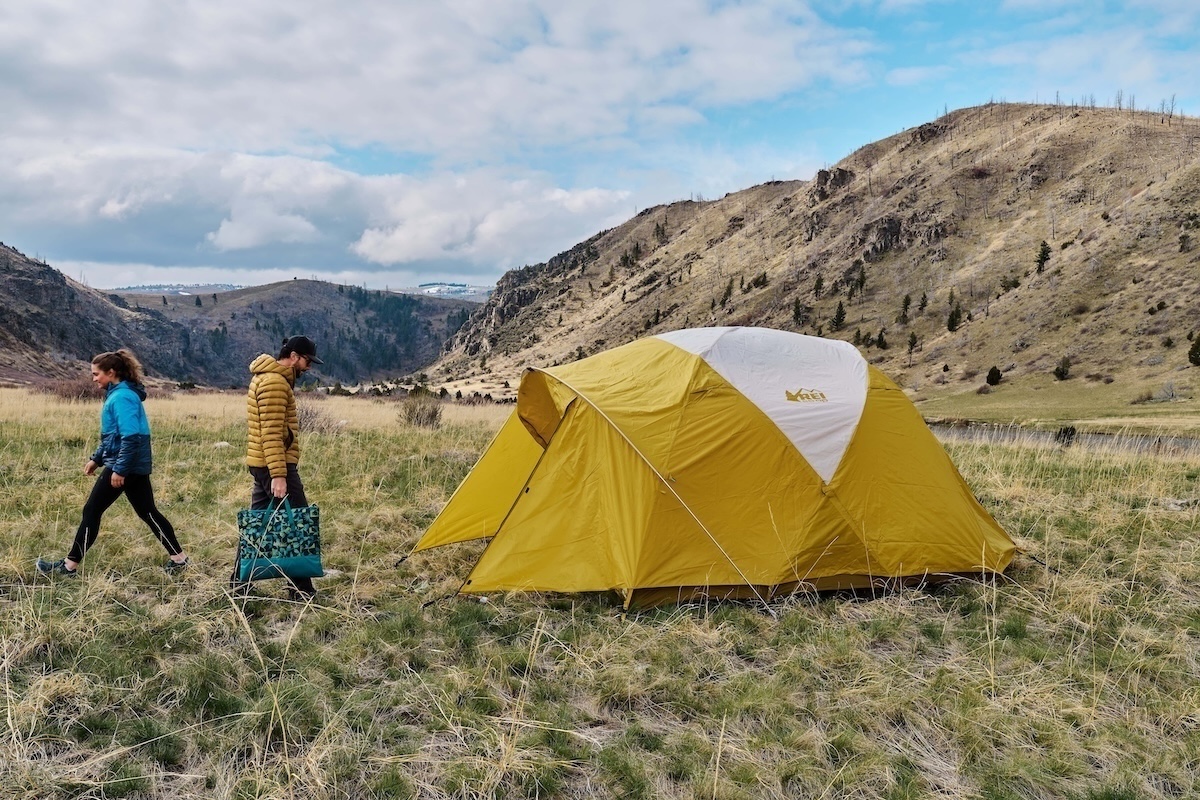
- Price: $549
- Weight: 20 lbs 11.5 oz
- Size: 84 sq ft floor, best for 3–4 people comfortably (rated for up to 6)
- Where to buy: REI.com
This is the inverse of the Wonderland 4 — built specifically for foul weather rather than comfort in mild conditions. Full-coverage rainfly, large vestibules, 14 internal storage pockets, and sturdy pole architecture. Ventilation is mediocre in hot weather since it’s not mesh-heavy, but that’s the right tradeoff for a tent whose job is keeping a family dry and warm through a real storm.
Pros: Excellent full-coverage weather protection, large vestibules, tons of internal storage, sturdy build quality Cons: Mediocre ventilation in hot weather, heavy, bulky carry bag
Collapse-Scenario Reasoning: The best family-size shelter on this list for genuine grid-down conditions. If I were stocking one long-term family shelter for a collapse scenario, this is the one I’d put in the cache. Rating: 4.6 / 5
Quick Reference Table
| Tent | Tier | Size | Price | Weight | Rating |
|---|---|---|---|---|---|
| Coleman Sundome 2 | Low-Budget | Backpacking | $76.99 | 7.9 lbs | 2.6 / 5 |
| Coleman Sundome 4 | Low-Budget | Family | $117.99 | 9–11.1 lbs | 2.8 / 5 |
| REI Co-op Passage 2 | Budget | Backpacking | $159 | 5 lb 10 oz | 3.8 / 5 |
| Coleman Skydome 6 | Budget | Family | $125.99–$179.99 | ~16–19 lbs | 3.0 / 5 |
| MSR Elixir 2 | Mid-Level | Backpacking | $339.95 | ~6 lbs | 4.3 / 5 |
| REI Co-op Wonderland 4 | Mid-Level | Family | $429 | 21 lb 11 oz | 3.4 / 5 |
| Hilleberg Nallo 2 | High-End | Backpacking | ~$1,030 | 5 lb 1 oz | 4.8 / 5 |
| REI Co-op Base Camp 6 | High-End | Family | $549 | 20 lb 11.5 oz | 4.6 / 5 |
Bottom Line
If I could only make two purchases from this list, I’d put my money into the MSR Elixir 2 (backpacking bug-out bag) and the REI Co-op Base Camp 6 (static family shelter) — both hit the sweet spot of real weather performance without Hilleberg-level pricing.
The Hilleberg Nallo 2 is the one to buy if this tent genuinely has to survive years of hard use in the worst conditions imaginable and money isn’t the deciding factor. I’d skip the low-budget tier for anything beyond a spare/loaner shelter — the pole failures reported across both Coleman Sundome models are a real risk when you can’t order replacements off of Amazon or just drive to REI for a replacement.
All prices reflect current retailer listings as of mid-2026 and fluctuate with sales — verify current pricing before purchase.
Sleeping Bags & Emergency Bivy Sacks: Ultra-Low Budget to High-End — A Field Review
I put together this lineup the same way I test everything else that goes into a Collapse Ready cache: real gear, real prices, and an honest look at whether it’ll actually keep you and your family alive through a bad night, not just a fun weekend. Four price tiers for sleeping bags (adult + child in each), and three tiers for emergency bivy sacks. Every photo below is the actual product being reviewed.
SLEEPING BAGS
ULTRA-LOW BUDGET TIER
1. Ozark Trail 35°F Cool Weather Rectangular Sleeping Bag (Adult)
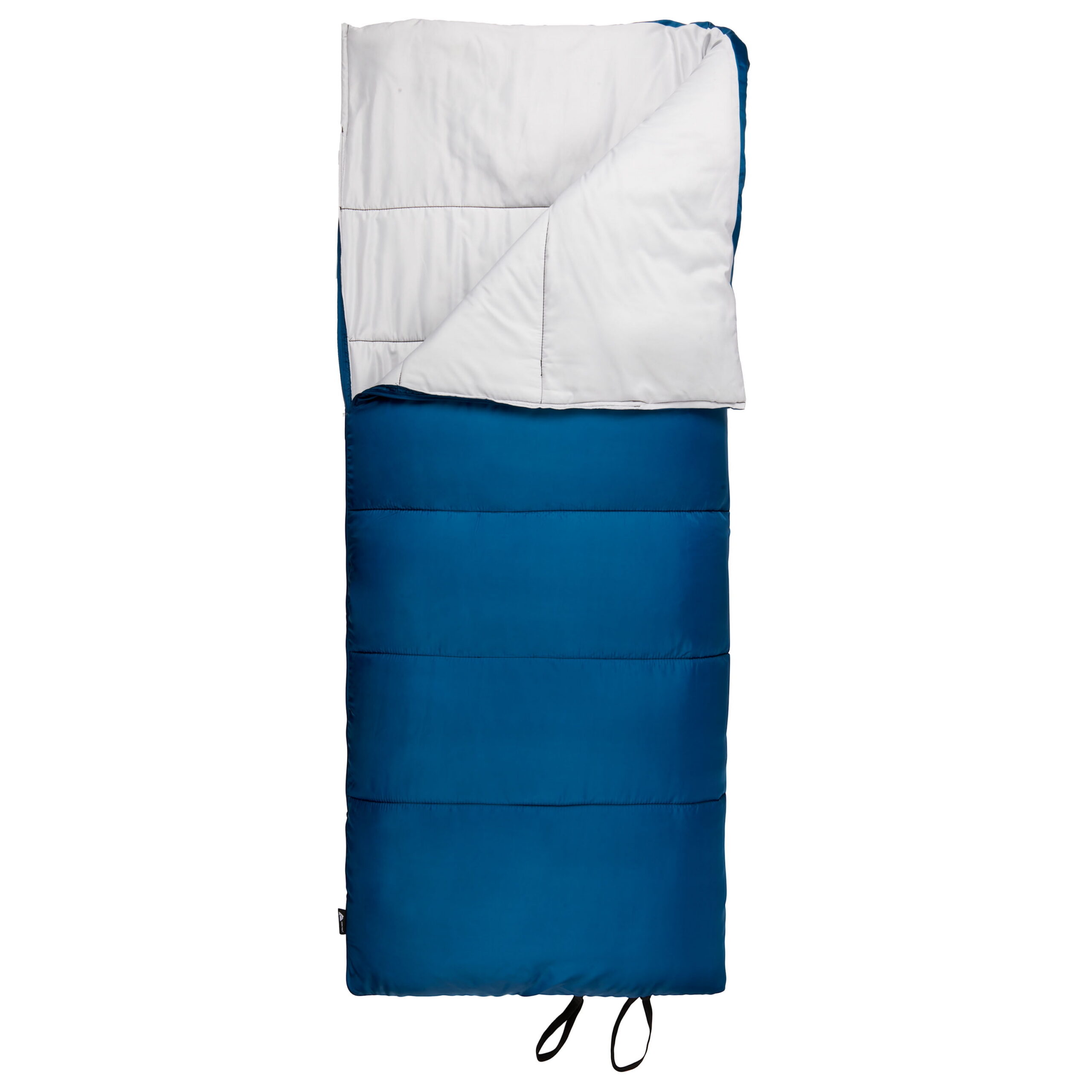
- Price: $20.62
- Weight: 4.7 lbs
- Size: 33″ x 77″
- Where to buy: Walmart.com
I’ve used one of these as a loaner bag, and it’s exactly what you’d expect for $20 — it’s a bag, it has fill, it zips. The “35°F” rating is rather optimistic; most reviewers (myself included) find it performs closer to a 45-50°F bag in practice, and the zippers are the first thing to fail with repeated use.
Pros: Dirt cheap, widely available, decent for a spare/loaner, machine washable Cons: Misleading temperature rating, zipper reliability is poor, heavy for what it delivers, thin fill compresses over time.
Collapse-Scenario Reasoning: This is a “one per extra body in the house” bag — cheap enough to stockpile several as spares or barter items, but I would not want this as anyone’s primary bag in genuinely cold, sustained grid-down conditions. Rating: 2.3 / 5
2. Ozark Trail Youth Warm Weather Rectangle Sleeping Bag (Child)
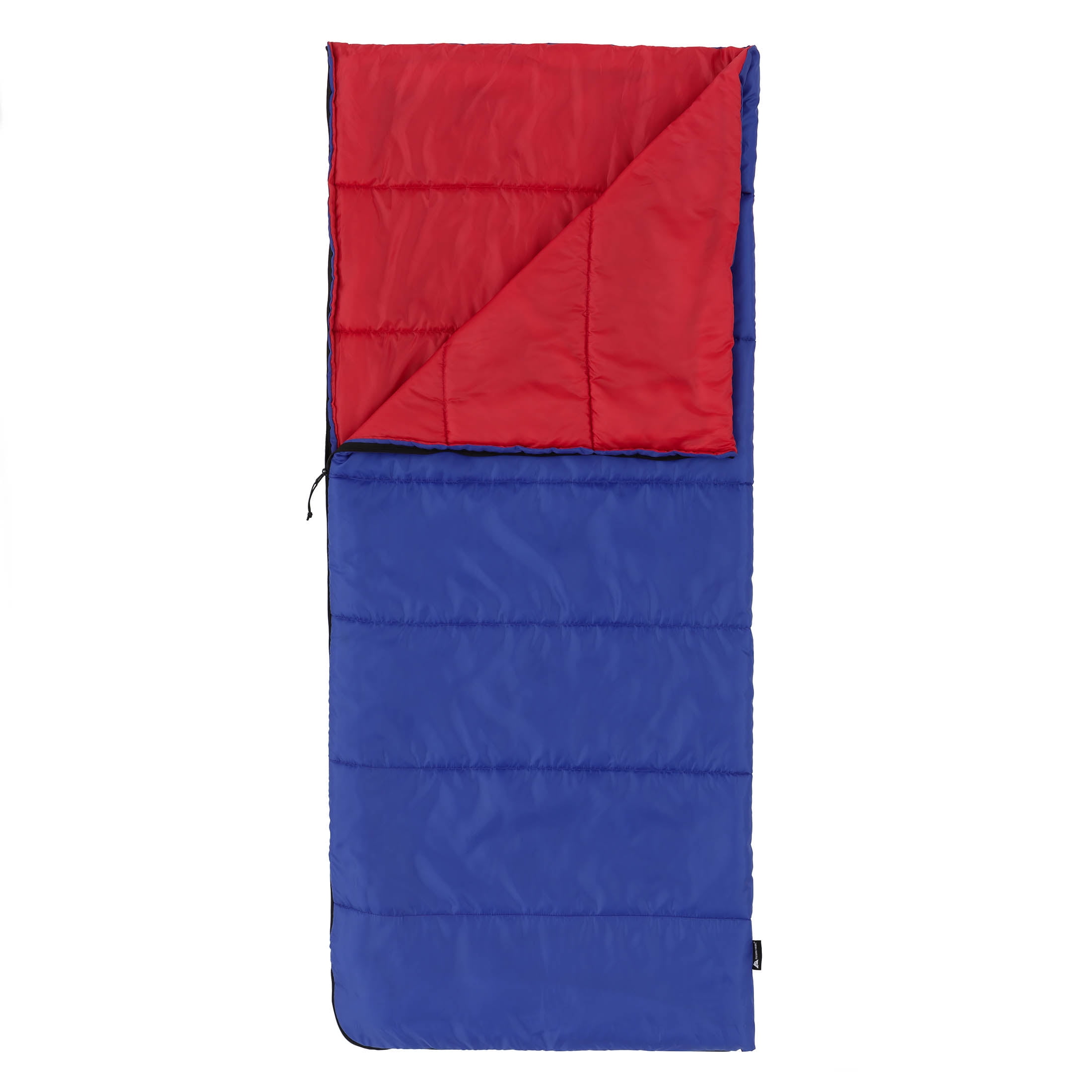
- Price: $14.88
- Weight: 1.85 lbs
- Size: 64″ x 28″, rated to 50°F
- Where to buy: Walmart.com
The kid-sized version of the same construction — bright colors, easy for a child to associate with “their” bag, genuinely light for tossing in a bug-out bag. The 50°F rating is honest here in a way the adult version isn’t — this is a summer/mild-weather bag only.
Pros: Very light for a kid to carry themselves, cheap enough to buy multiples, fun colors reduce kid anxiety during a stressful evacuation Cons: Only good down to true 50°F+ conditions, thin material, not a durable long-term storage item.
Collapse-Scenario Reasoning: Fine as a warm-season spare or a “comfort item” bag for a child, but pair it with a wool blanket or bivy sack for any real cold-weather insurance. Rating: 2.5 / 5
BUDGET TIER
3. Coleman Brazos 30°F Sleeping Bag (Adult)
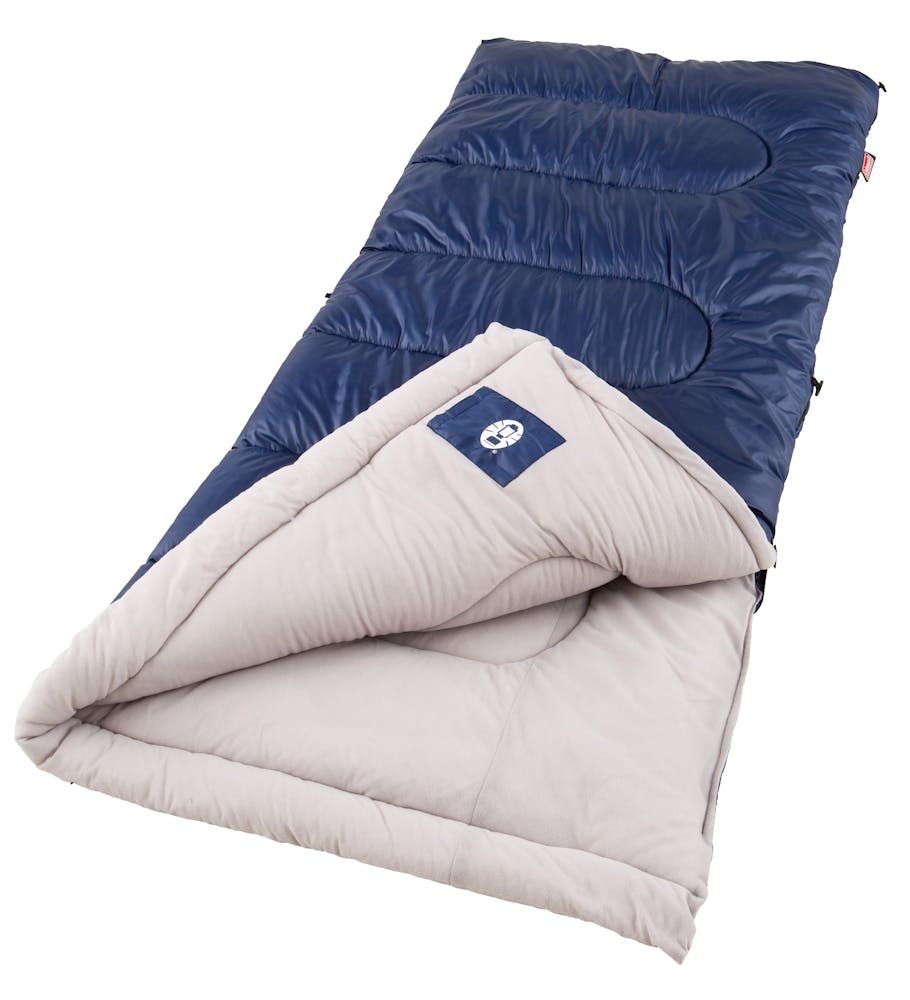
- Price: $53.99 (Coleman.com), often found for ~$47 at retail
- Weight: 5 lb 2.9 oz
- Size: 75″ x 33″
- Where to buy: Coleman.com, Amazon, Walmart
This is a real step up from the ultra-low tier. Fiberlock construction actually keeps the insulation from bunching up over time, and the Thermolock draft tube makes a noticeable difference on a cool night. It’s bulky and takes some wrestling to repack into its stuff sack, but the fill genuinely performs closer to its rating than the Ozark Trail bags do.
Pros: Good value, decent warmth-to-price ratio, doubles as a quilt/blanket when unzipped flat, machine washable Cons: Bulky and heavy for its warmth rating, hard to repack tightly, no hood.
Collapse-Scenario Reasoning: A solid pick for a static home cache — you’re not carrying this on foot for miles, but for a bug-in scenario or vehicle kit, it’s dependable and easy to replace. Rating: 3.6 / 5
4. Coleman Kids 45°F Sleeping Bag (Child)

- Price: $74.99 (frequently discounted from $90)
- Weight: 2.9 lbs
- Size: Fits children up to 5’5″
- Where to buy: Coleman.com, Amazon, gosupps.com
ThermoTech insulation and a ZipPlow anti-snag zipper system make this noticeably nicer to use than the ultra-low tier — my biggest complaint with cheap kids’ bags is zippers that pinch fingers and skin, and this one solves that specific problem well.
Pros: Anti-snag zipper is a genuine parenting win, comfortable lining, machine washable, fits a wider age range than most youth bags Cons: Pricier than most kids’ bags in this size class, 45°F rating means it’s not a cold-weather solution on its own.
Collapse-Scenario Reasoning: A good “daily driver” bag for a kid in a home-based emergency, but I’d pair it with a bivy sack or extra blanket layer for anything below freezing. Rating: 3.5 / 5
MID-LEVEL TIER
5. TETON Sports Celsius XL 20°F Sleeping Bag (Adult)
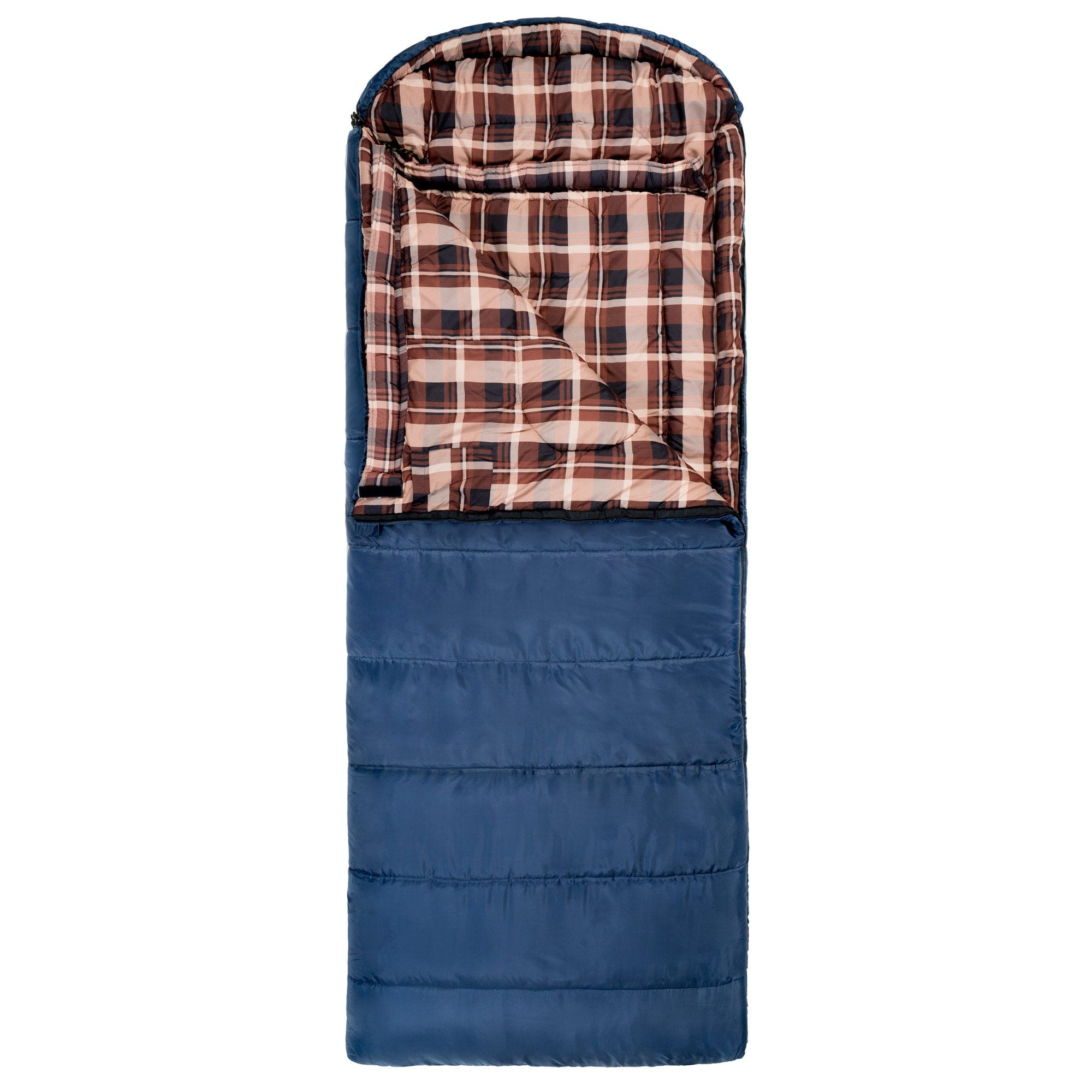
- Price: $83.99 (sale from $104.99)
- Weight: 7.5 lbs
- Size: 90″ x 36″
- Where to buy: TetonGear.com, Amazon
The double-layer construction and brushed flannel lining make this feel more like sleeping under real blankets than a typical synthetic bag — genuinely comfortable, and the oversized cut means it won’t feel claustrophobic during a stressful night. It’s heavy, though; this is a “car camping / static shelter” bag, not something you’re hiking with.
Pros: Excellent comfort, true 20°F performance, lifetime warranty, oversized fit works for larger-framed adults Cons: Heavy at 7.5 lbs, bulky packed size, not suited for a bug-out bag.
Collapse-Scenario Reasoning: Great home-cache bag — the lifetime warranty and genuine cold-weather performance make it a buy-it-once option for a bug-in scenario. Rating: 4.2 / 5
6. Big Agnes Wolverine 20° Youth Sleeping Bag (Child)
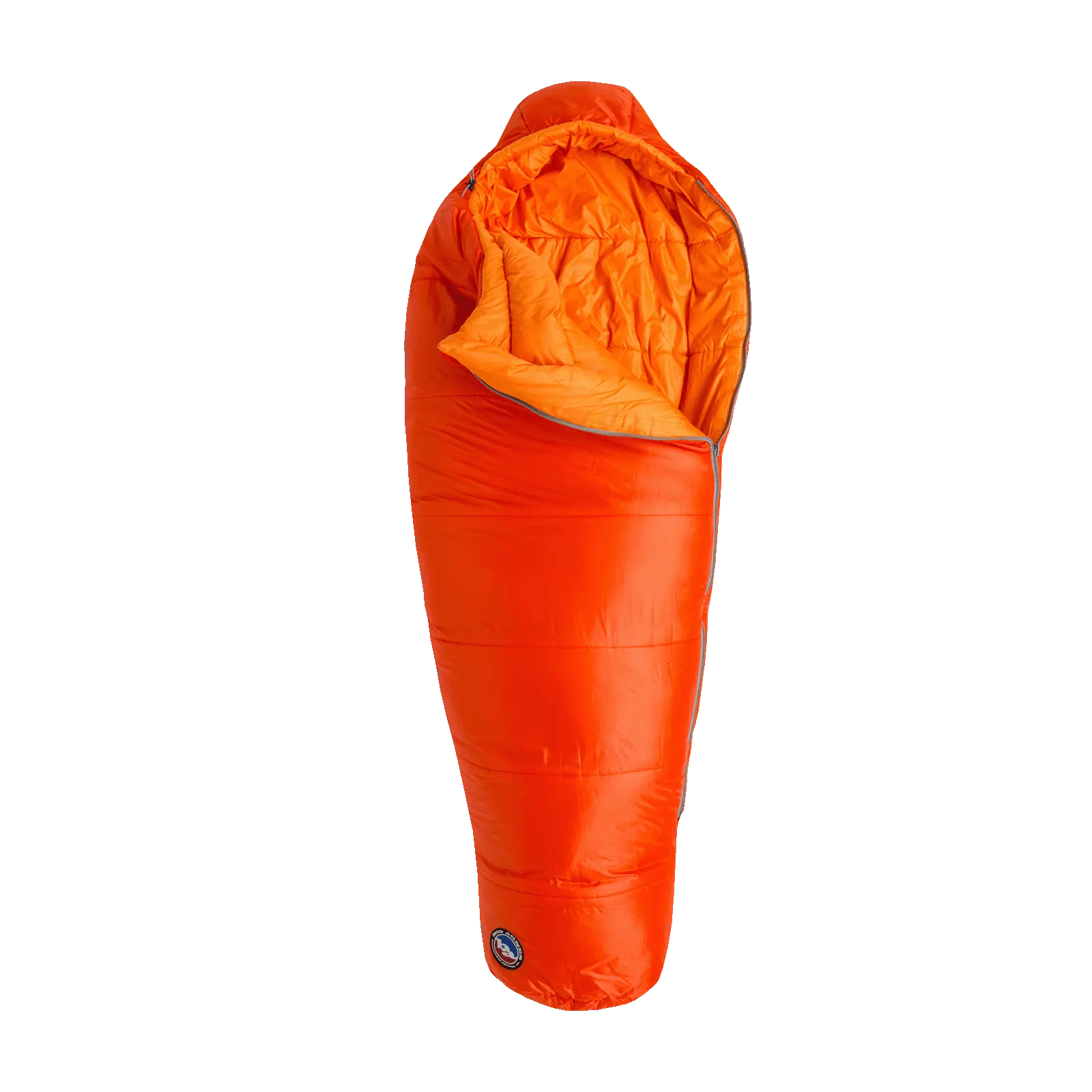
- Price: $129.95
- Weight: 2 lbs 4 oz
- Size: Fits children up to 4’8″
- Where to buy: BigAgnes.com, REI.com
The PadLok system is the standout feature here — it keeps a kid from rolling off their sleeping pad in the night, which matters a lot more than it sounds like when you’re trying to keep a child warm on cold ground. Synthetic Fireline Core Eco insulation performs well even if it gets a little damp, which matters for real-world kid use.
Pros: PadLok pad-attachment system genuinely works, good warmth-to-weight for a kid’s bag, recycled materials, durable Cons: Pricier than most kids’ bags, sizing maxes out relatively early (4’8″).
Collapse-Scenario Reasoning: One of the better options if you want your child’s bag to actually perform in genuine cold rather than just be “cute.” Rating: 4.4 / 5
HIGH-END TIER
7. Western Mountaineering UltraLite Sleeping Bag (Adult)
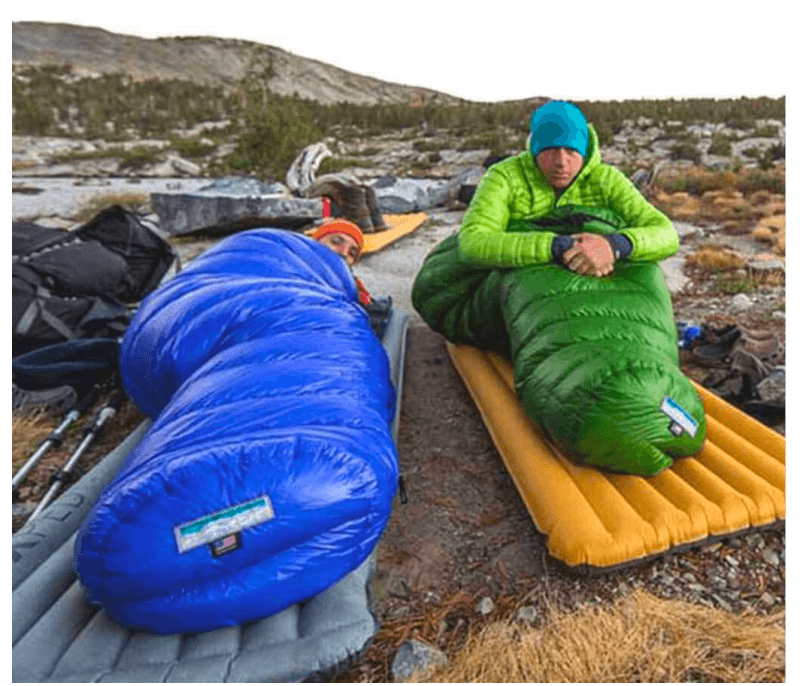
- Price: $640–$685 (official), commonly found around $525 through retailers/resellers
- Weight: 1 lb 13 oz (29 oz)
- Rating: 20°F, 850+ fill goose down
- Where to buy: WesternMountaineering.com, Backcountry.com, Moosejaw
This is the bag I’d grab first if I had to move fast and far. Made in the USA, 850+ fill down, and a warmth-to-weight ratio that genuinely has no peer in this price range. It compresses down to almost nothing and performs conservatively — meaning it’s actually warmer in real conditions than its rating suggests, which is the opposite of most budget bags.
Pros: Best-in-class warmth-to-weight ratio, made in USA, conservative (trustworthy) temperature rating, compresses extremely small.
Cons: Expensive, down loses insulating power if it gets soaked, bulkier-feeling loft than ultralight synthetic alternatives despite the low weight.
Collapse-Scenario Reasoning: If you need one bag that can go anywhere — bug-out bag, vehicle kit, or home cache — and perform reliably in real cold for years, this is it. Buy a dry bag or waterproof stuff sack to protect the down. Rating: 4.8 / 5
8. Big Agnes Torchlight EXP Youth 20° Sleeping Bag (Child)
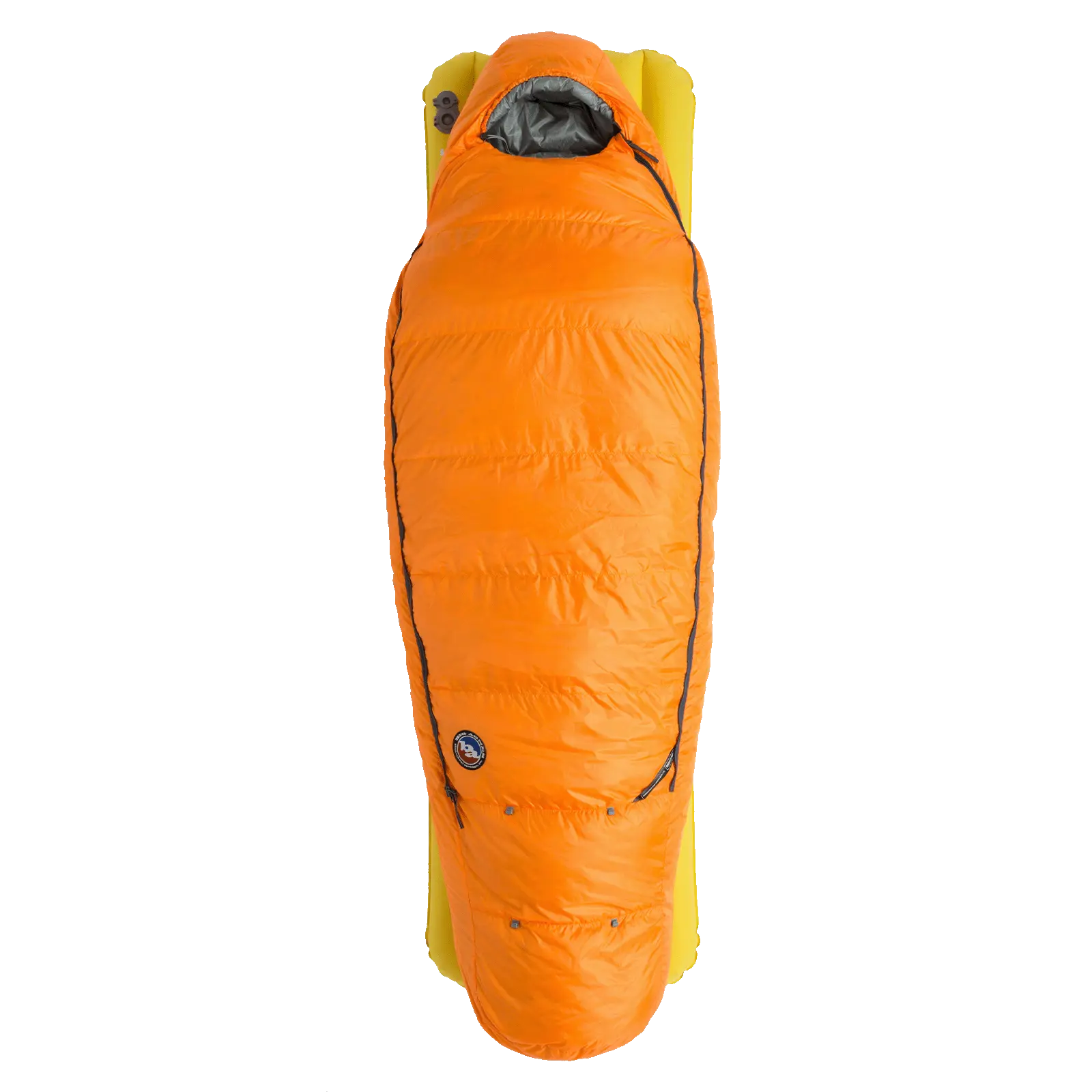
- Price: $259.95
- Weight: 1 lb 12 oz
- Size: Adjustable, fits toddler up to 5’4″
- Where to buy: BigAgnes.com, REI.com
This is the one kids’ bag on the list that’s genuinely built to last through years of growth spurts — the expandable zippered panels let it grow with a child from toddler to teen, so you’re not rebuying a new bag every year. 650-fill Downtek down keeps the weight remarkably low for its size range.
Pros: Grows with the child (huge cost-of-ownership advantage over years), genuinely light for a down bag this size, PadLok-compatible, water-repellent down Cons: High upfront price for a kids’ item, down means it needs to stay dry to perform.
Collapse-Scenario Reasoning: The best long-term investment on this list if you’re stocking gear for a child who will need it for multiple years rather than one season — the “grows with them” design means you’re not replacing a kids’ bag on a collapse-scenario timeline. Rating: 4.5 / 5
EMERGENCY BIVY SACKS
A quick note before this section: true child-specific emergency bivy sacks don’t really exist as a commercial product — the mylar and breathable-fabric bivies on the market are built one-size-fits-most (they’re meant to wrap around a curled-up adult, which means plenty of room for a child too). So instead of forcing a fake “kids’ version” into each tier, I’m pairing each adult/standard bivy with the lightest, smallest, or multi-pack option in that price range — the practical answer to “what do I get for my kid” in this category.
ULTRA-LOW BUDGET TIER
9. SOL Emergency Bivvy with Rescue Whistle (Standard/Adult)
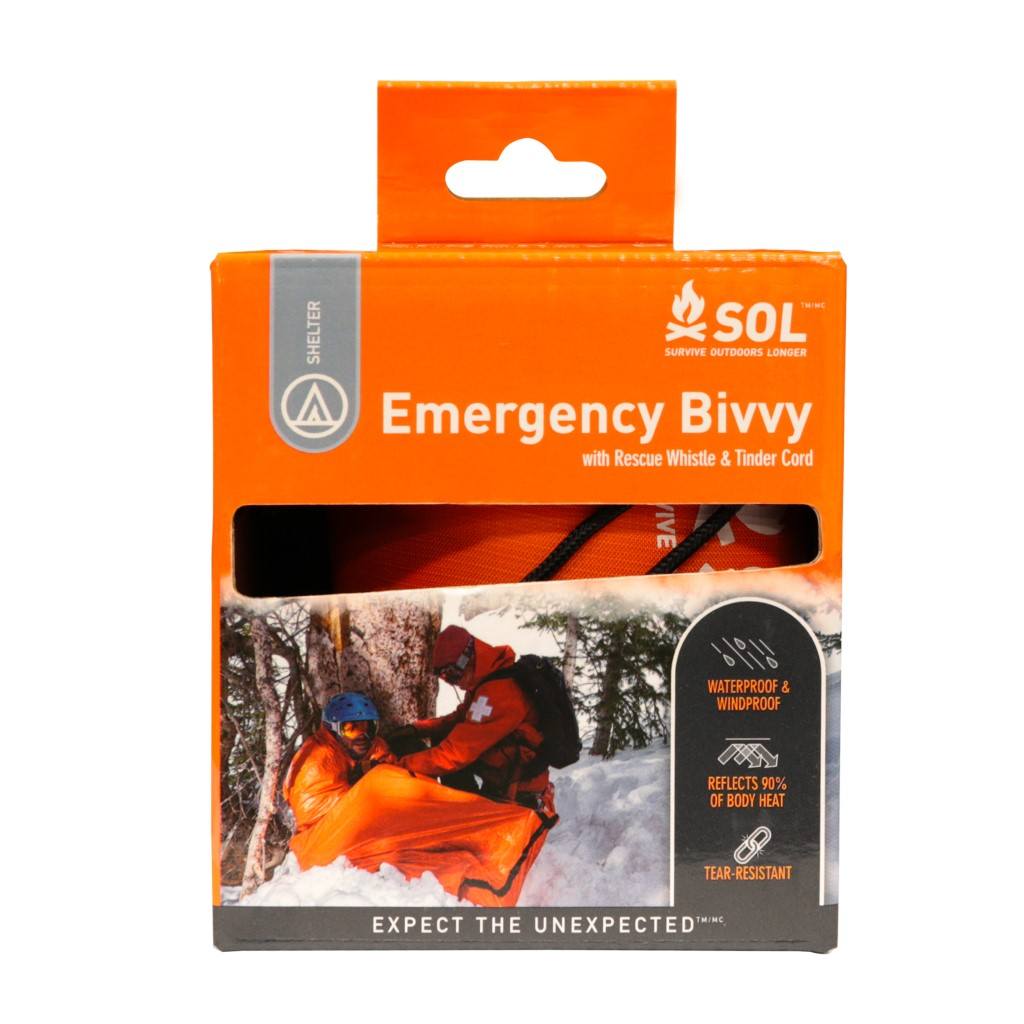
- Price: $24.49–$25.50
- Weight: Under 4 oz
- Size: 84″ x 36″
- Where to buy: REI.com, SurviveOutdoorsLonger.com, Amazon
This is the single cheapest piece of genuinely life-saving gear you can put in every vehicle, every bug-out bag, and every kid’s backpack. Reflects 90% of body heat, smaller packed than a soda can, and includes a rescue whistle and tinder cord. I keep several of these scattered across every kit, car, and motorcycle I own.
Pros: Extremely cheap, tiny and light, reflects 90% of body heat, includes whistle + tinder cord Cons: Single-use in practice (crinkly mylar tears with repeated folding/unfolding), condensation buildup inside, not breathable.
Collapse-Scenario Reasoning: Buy several — for the price, there’s no excuse not to have one in every bag, vehicle, and coat pocket in the household. Rating: 4.3 / 5
10. Leberna Emergency Sleeping Bag 2-Pack (Compact/Family Value — works for a child too)
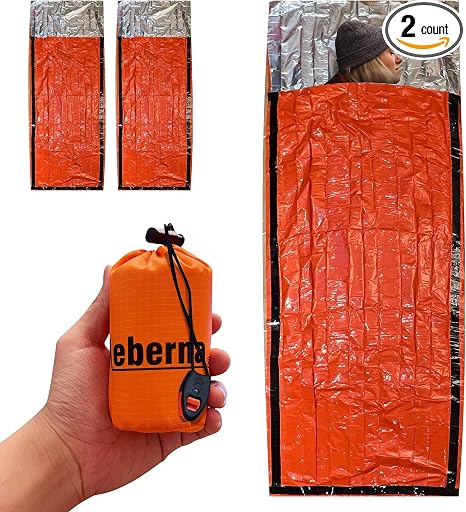
- Price: $15.74 for the 2-pack
- Weight: 2.8 oz each
- Size: 84″ x 36″ each
- Where to buy: Amazon
Two bags for less than the price of one SOL bivvy — this is how I’d cover both an adult and a child in the same purchase without stretching the budget. Same core mylar technology, includes a whistle on each, and the bright yellow trim helps visibility if you actually need rescue.
Pros: Cheapest per-unit cost on this list, 2-pack means one for an adult and one sized appropriately tucked/folded for a child, whistle included on both Cons: Same durability limitations as any mylar bivy — thin material, not reusable long-term, no breathability.
Collapse-Scenario Reasoning: The best per-dollar way to make sure every family member has emergency thermal protection in the car or bug-out bag. Rating: 4.0 / 5
MID-LEVEL TIER
11. SOL Escape Bivvy with Hood (Standard/Adult)
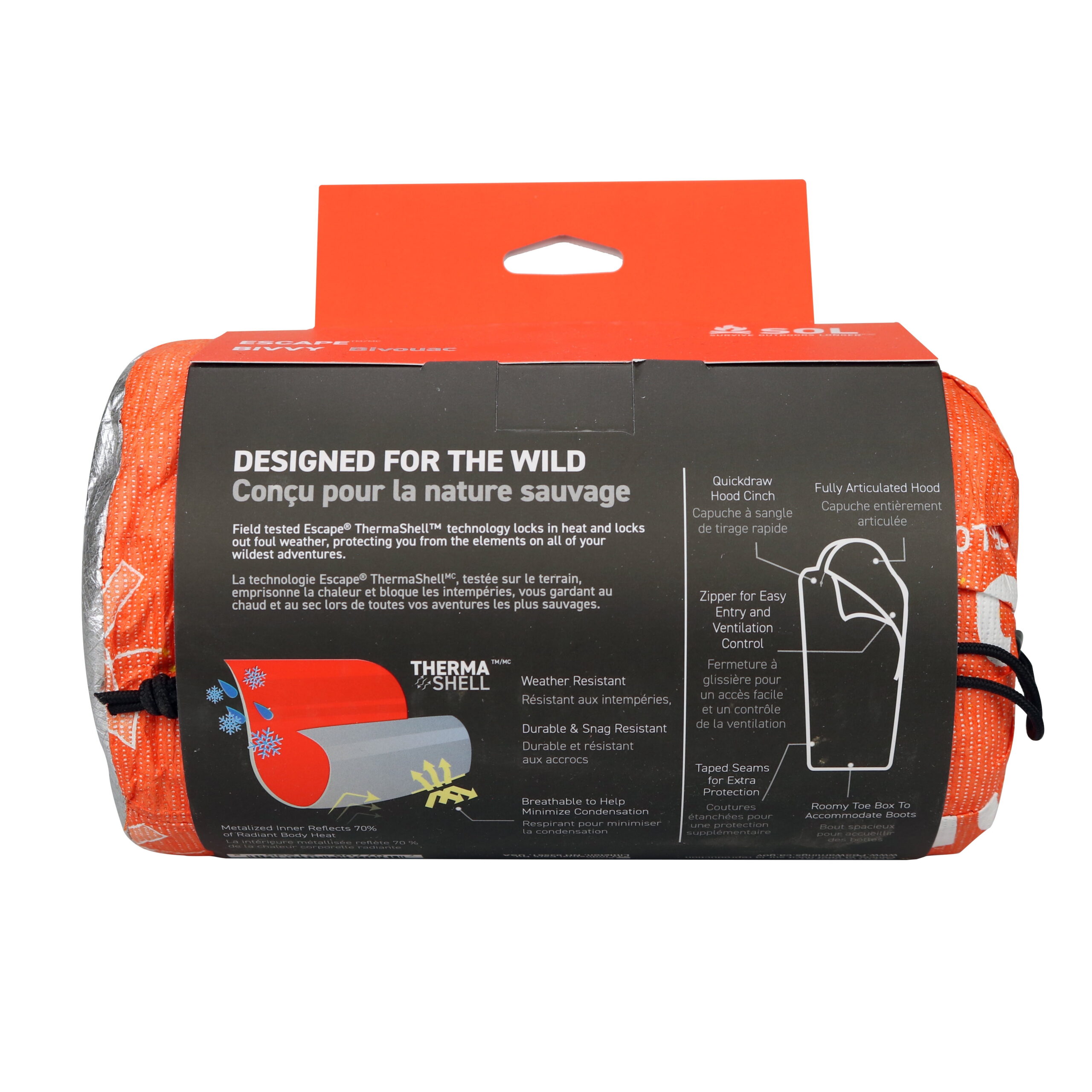
- Price: $62.99–$69.95
- Weight: 8.5 oz
- Size: 84″ x 31″
- Where to buy: Walmart.com, REI.com, Colorado Kayak
This is the reusable step up from the disposable mylar bivies — breathable fabric means far less condensation buildup than a one-time-use bag, and it’s durable enough to actually keep in rotation rather than treat as a single-use item. Reflects 70% of body heat, less than the mylar bags, but the breathability tradeoff is worth it for anything beyond a single emergency night.
Pros: Reusable across many nights, breathable (much less condensation than mylar), hood for added warmth, 2-year warranty Cons: Reflects less heat than disposable mylar bivies (70% vs. 90%), still needs a sleeping pad underneath for real insulation, pricier than the ultra-low tier.
Collapse-Scenario Reasoning: The right pick if this bivy needs to survive repeated real-world use rather than sit in a bag for years untouched. Rating: 4.1 / 5
12. SOL Escape Lite Bivvy (Lightweight/Compact — good fit for a smaller frame or teen)
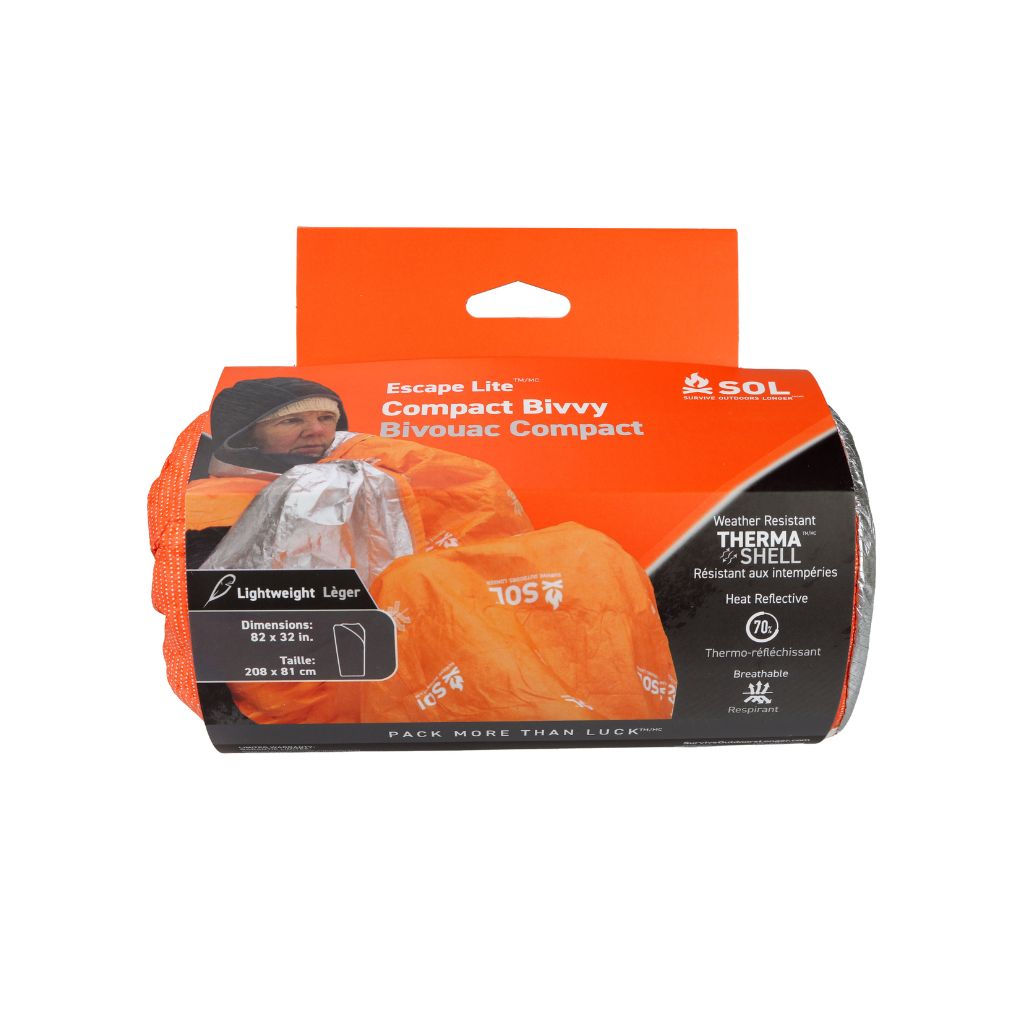
- Price: Typically priced a bit below the standard Escape Bivvy (verify current pricing at SOL’s site — it fluctuates)
- Weight: 5.5 oz
- Size: 82″ x 32″
- Where to buy: SurviveOutdoorsLonger.com, REI.com
Same breathable technology as the standard Escape Bivvy, shaved down to a lighter, more packable footprint — a smart pick for a smaller-framed teen or as the lightest option in a family bug-out bag rotation.
Pros: Very light, breathable, works as a liner or standalone summer sleeping bag, 2-year warranty Cons: Less warmth retention than the standard Escape Bivvy given the lighter material, price consistency varies by retailer.
Collapse-Scenario Reasoning: The best “carry weight matters” option in the mid-tier — good for a teen’s own bug-out bag where every ounce counts. Rating: 4.0 / 5
HIGH-END TIER
13. Outdoor Research Alpine Bivy (Standard/Adult)

- Price: $250
- Weight: 586 g (~1 lb 4.7 oz)
- Where to buy: OutdoorResearch.com, REI.com
Three-layer Gore-Tex construction and a single overhead pole for real headroom put this in a completely different class than anything else on this list — this is genuine four-season, alpine-conditions gear, not an emergency-only item. It’s the bivy I’d actually want to sleep in for multiple nights in a real storm, not just survive one night in.
Pros: True 4-season weather resistance, excellent comfort and headroom for a bivy, durable Gore-Tex construction, minimizes condensation well for a solo shelter Cons: Heavier and bulkier than lighter bivies, no stakes included, expensive.
Collapse-Scenario Reasoning: If a bivy sack needs to be a genuine long-term shelter option rather than a last-resort emergency item, this is the one on the list built for that job. Rating: 4.7 / 5
14. Snugpak Special Forces Bivvi Bag (Compact/Reusable — good option for a teen or smaller adult)

- Price: $160–$220 depending on retailer
- Weight: 12 oz
- Size: 90″ x 33″, packs to 6″ x 4″
- Where to buy: Amazon, BrigadeQM.com, SnugpakUSA.com
This is genuine military-contract gear — Paratex Dry breathable fabric, taped seams, and a 5,000mm hydrostatic head rating, built to be used and reused for years rather than treated as an emergency-only item. The half-length zip is a smart compromise between weight savings and usability.
Pros: Military-spec durability and waterproofing, reusable indefinitely, packs down extremely small for its performance level, doubles as an outer shell over a sleeping bag Cons: Pricier than most reusable bivies its size, half-length zip is slightly less convenient than a full-length one.
Collapse-Scenario Reasoning: A great “smaller and lighter but still built to last” high-end option — good for a teen’s kit or anyone who wants Alpine-Bivy-level durability without the bulk. Rating: 4.5 / 5
Quick Reference Table
| Item | Tier | Type | Price | Weight | Rating |
|---|---|---|---|---|---|
| Ozark Trail 35°F | Ultra-Low Budget | Adult Sleeping Bag | $20.62 | 4.7 lbs | 2.3 / 5 |
| Ozark Trail Youth | Ultra-Low Budget | Child Sleeping Bag | $14.88 | 1.85 lbs | 2.5 / 5 |
| Coleman Brazos 30°F | Budget | Adult Sleeping Bag | $53.99 | 5 lb 2.9 oz | 3.6 / 5 |
| Coleman Kids 45°F | Budget | Child Sleeping Bag | $74.99 | 2.9 lbs | 3.5 / 5 |
| TETON Celsius XL | Mid-Level | Adult Sleeping Bag | $83.99 | 7.5 lbs | 4.2 / 5 |
| Big Agnes Wolverine 20° Youth | Mid-Level | Child Sleeping Bag | $129.95 | 2 lb 4 oz | 4.4 / 5 |
| Western Mountaineering UltraLite | High-End | Adult Sleeping Bag | $640–$685 | 1 lb 13 oz | 4.8 / 5 |
| Big Agnes Torchlight EXP Youth | High-End | Child Sleeping Bag | $259.95 | 1 lb 12 oz | 4.5 / 5 |
| SOL Emergency Bivvy | Ultra-Low Budget | Standard Bivy | $24.49–$25.50 | <4 oz | 4.3 / 5 |
| Leberna 2-Pack | Ultra-Low Budget | Compact/Family Bivy | $15.74 (2-pack) | 2.8 oz each | 4.0 / 5 |
| SOL Escape Bivvy | Mid-Level | Standard Bivy | $62.99–$69.95 | 8.5 oz | 4.1 / 5 |
| SOL Escape Lite Bivvy | Mid-Level | Lightweight/Compact Bivy | ~$55–65 | 5.5 oz | 4.0 / 5 |
| Outdoor Research Alpine Bivy | High-End | Standard Bivy | $250 | 1 lb 4.7 oz | 4.7 / 5 |
| Snugpak Special Forces Bivvi Bag | High-End | Compact/Reusable Bivy | $160–$220 | 12 oz | 4.5 / 5 |
Bottom Line
For a real collapse-ready cache, I’d build it like this: Western Mountaineering UltraLite or the TETON Celsius XL as the primary adult bag depending on whether portability or comfort matters more to you, the Big Agnes Wolverine/Torchlight for kids depending on budget, an SOL Emergency Bivvy in every single bag and vehicle in the household (cheap enough that there’s no reason not to), and an Outdoor Research Alpine Bivy or Snugpak Special Forces Bivvi Bag as the serious backup shelter for whoever’s most likely to be moving on foot.
All prices reflect current retailer listings as of mid-2026 and fluctuate with sales — verify current pricing before purchase.