Handheld Radios & Off-Grid Comms for a Collapse Scenario: A First-Person Field Review
Communication is the piece of prepping that people underinvest in the most — everyone stocks food and water, far fewer people have a working plan for how the household stays in contact when cell towers go dark. I tested this lineup across four categories: handheld radios, Meshtastic mesh-networking devices, base station radios, and other off-grid comms gear like satellite messengers. Every photo below is the actual product.
A quick licensing note: GMRS radios require an FCC license (no test, just a fee, covers your whole family). Ham/amateur radio requires passing a technician exam. Meshtastic devices operate on unlicensed ISM bands, so no license is needed. I’ll flag this per item below.
HANDHELD RADIOS
1. Baofeng UV-5R (Ultra-Low Budget)

- Price: ~$25–$30
- Type: Dual-band VHF/UHF, ham radio (technician license required for transmit)
- Channels: 128, CHIRP-programmable
- Battery: 1800mAh
- Where to buy: Amazon, BaofengTech.com
This is the radio everyone starts with, myself included, and it’s exactly what the reputation says: cheap, functional, and not particularly durable. Programming the stock menu is genuinely painful, but once you load it with CHIRP software it becomes usable fast. Range and audio quality are mediocre compared to anything else on this list.
Pros: Extremely cheap, widely available, easy to buy several as spares, CHIRP-programmable
Cons: Poor build quality and durability, unreliable stock antenna, receiver can suffer from interference issues, requires a ham license to transmit legally.
Collapse-Scenario Reasoning: Buy a stack of these as cheap spares for a family or group — even with the durability concerns, having five of these at $25 each beats having one expensive radio when you need to equip multiple people. Rating: 3.0 / 5
2. BTECH GMRS-V2 (Budget/Mid-Tier)
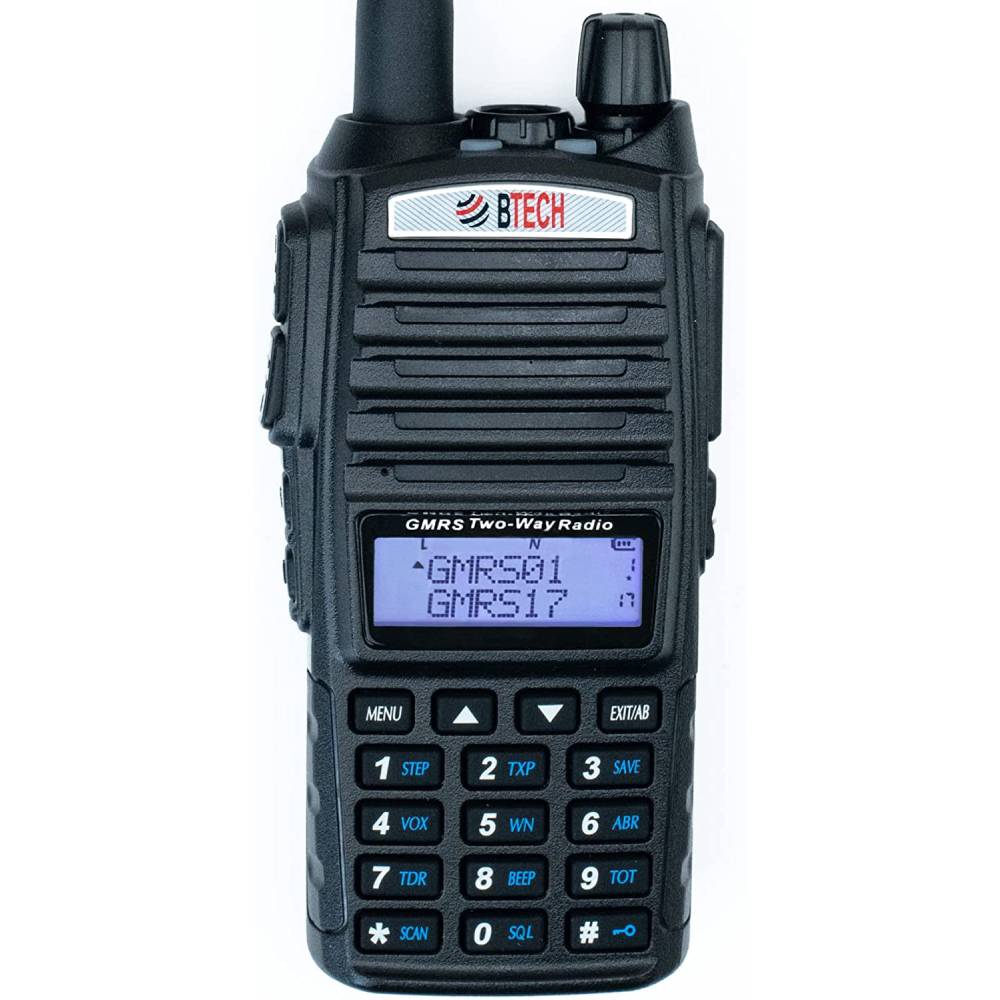
- Price: ~$60–$70
- Type: GMRS (license required, no exam — just an FCC fee that covers your whole family)
- Power: 5W with repeater capability
- Channels: 200 programmable
- Where to buy: BaofengTech.com, Amazon
This is where I’d point most families building a first comms kit — it’s a real step up from the Baofeng in build quality, and being GMRS means it’s legal to use with a simple license (no test required) and can hit GMRS repeaters for extended range. USB-C charging and IP54 weather resistance are genuinely useful upgrades for a device that might spend time in a bug-out bag.
Pros: GMRS repeater compatible, USB-C charging, IP54 weather resistance, built-in NOAA weather radio, dual PTT for monitoring two channels
Cons: Some reported battery inconsistency, NOAA reception can be spotty, still a budget radio internally.
Collapse-Scenario Reasoning: A strong value pick for a family GMRS setup — repeater access means real extended range beyond simple line-of-sight, and the license is trivial to obtain compared to ham. Rating: 4.1 / 5
3. Yaesu FT-5DR (High-End)
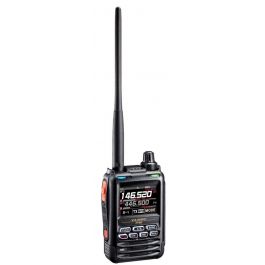
- Price: ~$480
- Type: Dual-band VHF/UHF ham radio, analog + C4FM digital (technician license required)
- Power: 300mW–5W adjustable
- Channels: 900 memory channels
- Where to buy: GigaParts.com, Ham Radio Outlet, Yaesu USA
This is genuinely serious equipment — true independent dual-receiver operation means you can monitor two frequencies simultaneously, the touchscreen and color display are a big usability jump, and APRS support means you can transmit GPS position data over the radio network itself, no cell service needed. IPX7 waterproof rating means it survives real field conditions.
Pros: True dual independent receivers, APRS GPS position reporting, IPX7 waterproof, Bluetooth capability, excellent build quality
Cons: Expensive, some reported build quality inconsistencies unit-to-unit, complex menu system has a learning curve, requires ham license.
Collapse-Scenario Reasoning: The APRS capability alone is a major collapse-scenario asset — it lets you share and track locations across a radio network without any cellular infrastructure at all. Worth the price if you’re serious about a comms plan. Rating: 4.6 / 5
MESHTASTIC DEVICES
4. Heltec V3 (Budget)
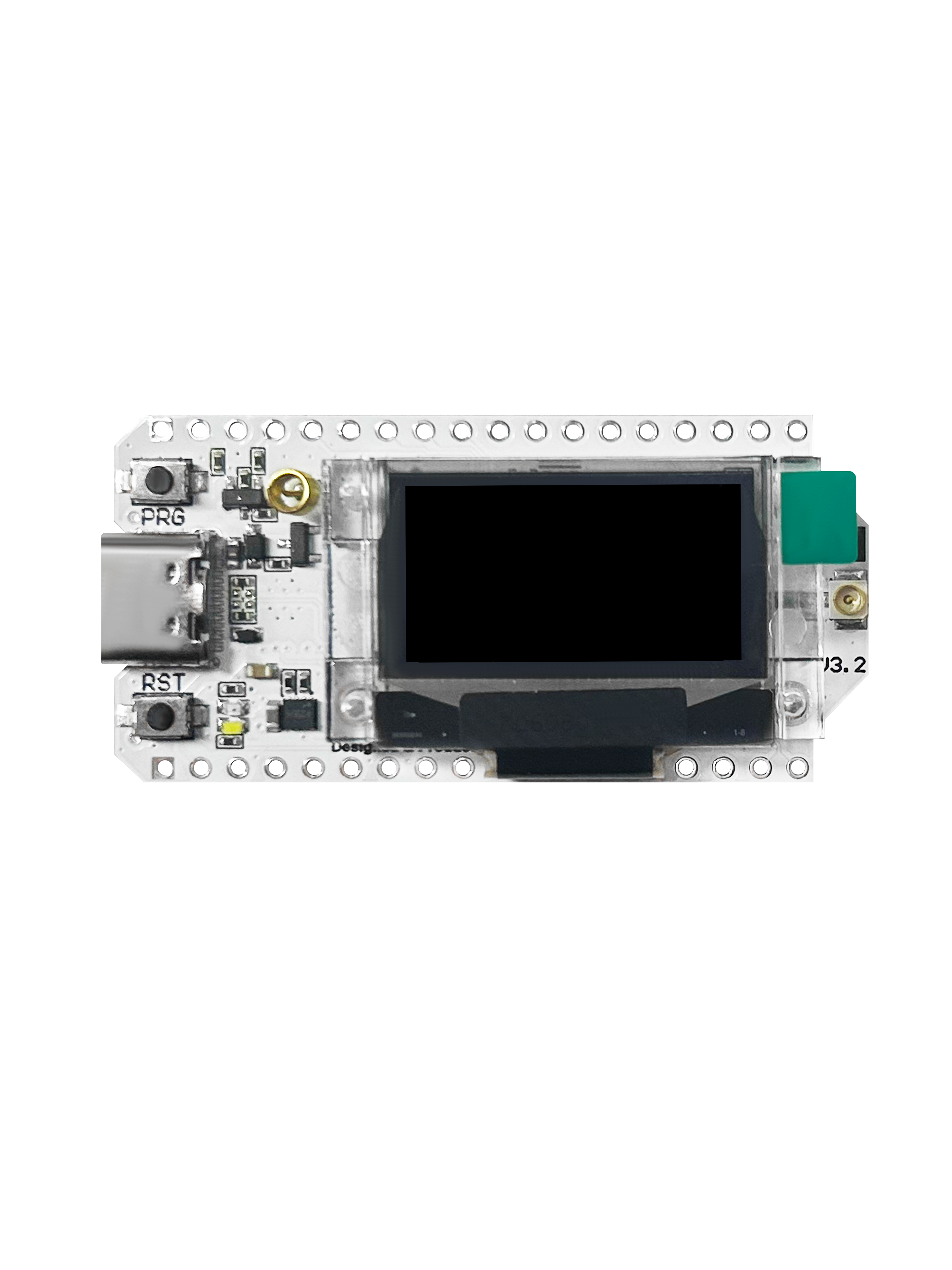
- Price: ~$25–$37 (bare board), ~$104 in a rugged pre-flashed case kit
- Type: LoRa mesh node, unlicensed ISM band, no license required
- Chipset: ESP32-S3 + SX1262 LoRa
- Where to buy: Heltec.org, Amazon, Smartnmagic.com
This is the cheapest legitimate entry into Meshtastic, and it’s genuinely capable once flashed — text messaging over a self-forming mesh network with zero cellular or internet dependency, completely license-free. The bare board needs some technical comfort to set up; the pre-flashed rugged-case version is worth the extra cost if you want something field-ready out of the box.
Pros: Very cheap for the capability, license-free operation, open-source firmware, active development community
Cons: Bare board requires DIY setup/flashing knowledge, no case included on cheapest version, small OLED screen.
Collapse-Scenario Reasoning: The best entry point for building out a family or neighborhood mesh network on a tight budget — text messages hop device-to-device with no infrastructure required at all. Rating: 4.2 / 5
5. LILYGO T-Beam (Mid-Tier)
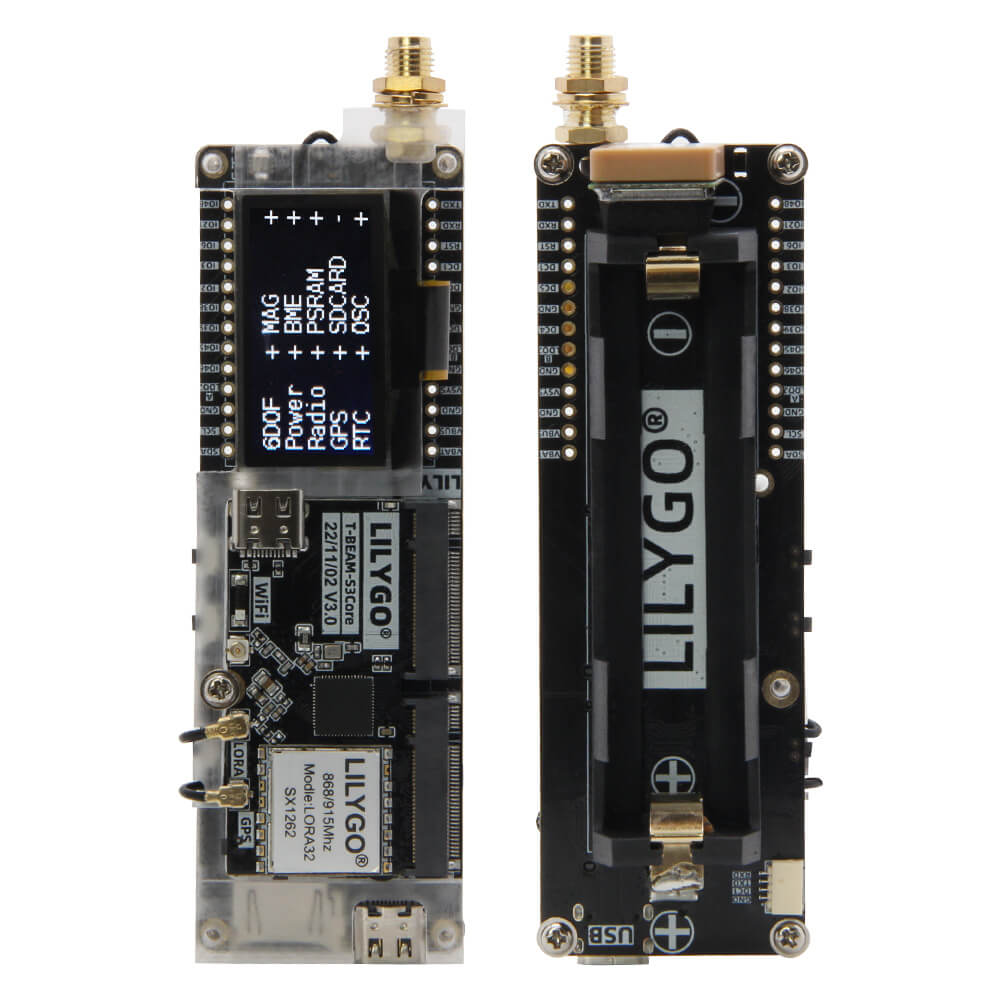
- Price: ~$40
- Type: LoRa mesh node with GNSS/GPS, unlicensed ISM band
- Chipset: ESP32-S3, various frequency options (433/868/915MHz)
- Where to buy: LILYGO.cc, Amazon
The built-in GPS receiver is the standout feature here — it adds position sharing across the mesh network on top of the text messaging, so your Meshtastic network becomes a location-sharing tool too, not just a chat network. The removable 18650 battery is a real practical advantage — you can swap in fresh cells instead of waiting for a recharge.
Pros: Built-in GPS for location sharing, removable/swappable 18650 battery, OLED display, active Meshtastic community support
Cons: Some reported reliability/durability concerns, still requires basic technical setup, sold out frequently due to demand
Collapse-Scenario Reasoning: GPS-enabled mesh nodes mean your group can see each other’s positions on a map with zero infrastructure — genuinely valuable for coordinating a dispersed family or group during an evacuation. Rating: 4.3 / 5
6. RAK WisMesh Pocket V2 (High-End)

- Price: ~$99
- Type: Ready-to-use LoRa mesh device, pre-flashed, unlicensed ISM band
- Battery: 3200mAh
- Where to buy: Store.RAKwireless.com, Hexaspot.com
This is the “it just works” option in the Meshtastic space — no soldering, no manual firmware flashing, it arrives ready to go with Meshtastic firmware pre-loaded. The IP66-rated enclosure and external SMA antenna connector (for range upgrades) put this well above the DIY boards in build quality, and it’s also compatible with the newer MeshCore firmware if you want to switch protocols later.
Pros: Ready-to-use out of the box (no flashing required), IP66 weatherproof enclosure, external antenna connector for range upgrades, large 3200mAh battery, GPS built in
Cons: More expensive than DIY boards, still a newer product with a smaller long-term track record
Collapse-Scenario Reasoning: The best choice if you want Meshtastic capability without becoming a hobbyist electronics person first — hand this to any family member and they can use it immediately. Rating: 4.6 / 5
BASE STATION RADIOS
7. BTECH GMRS-50X1 (Budget)
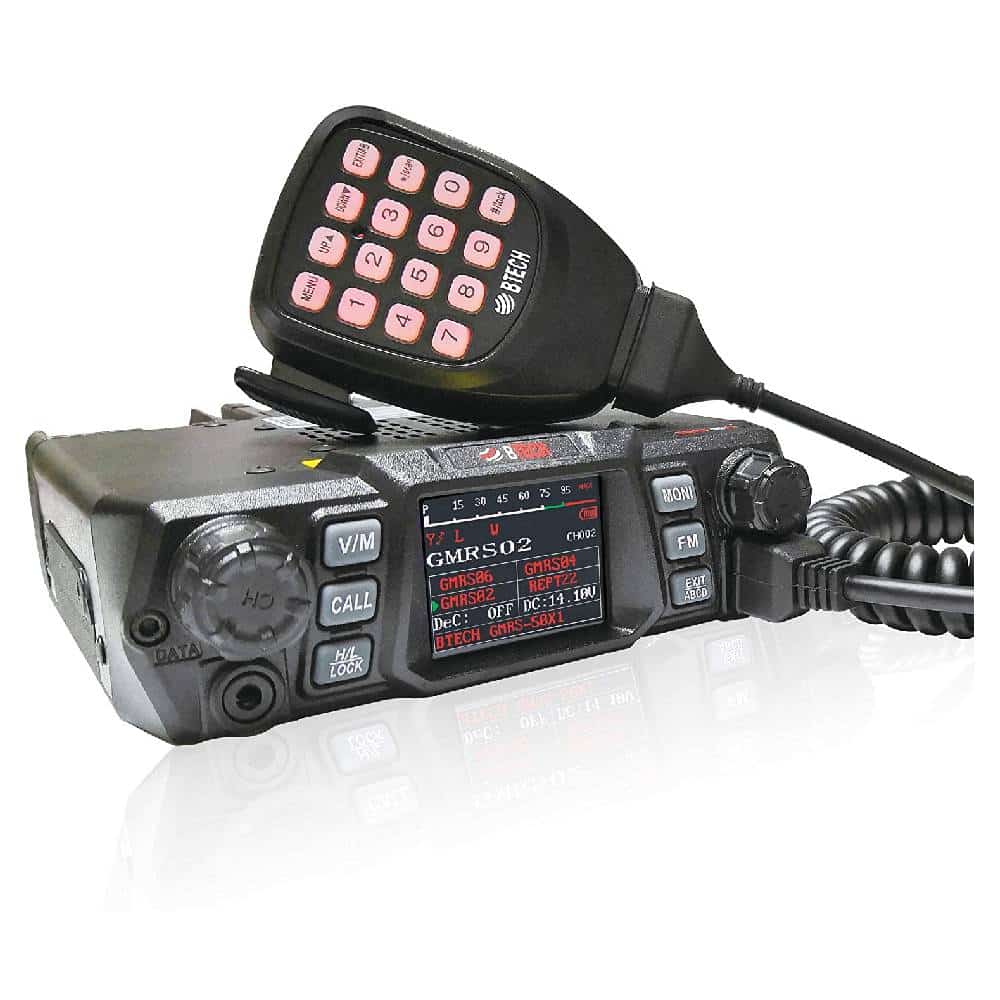
- Price: ~$130–$150
- Type: GMRS mobile/base radio (license required)
- Power: 5W/20W/50W selectable
- Where to buy: BaofengTech.com, Amazon
This is the radio I have at home as a base station, and in a couple of our vehicle as the anchor point for a family GMRS network — 50 watts of output power is a massive step up from any handheld, and quad-watch lets you monitor multiple channels at once. It requires a 12V power source and an external antenna setup, so it’s not something you just pull out of a box and use immediately.
Pros: 50W output for serious range, GMRS repeater compatible, NOAA weather and FM radio built in, affordable for the power level
Cons: Requires proper antenna installation to perform well, some programming limitations reported, needs a stable 12V power source
Collapse-Scenario Reasoning: A genuinely capable base station for the money — set this up at a home base or bug-out location with a good antenna and it becomes the anchor that handheld GMRS radios in the family can reach from much farther away. Rating: 4.3 / 5
8. Midland MXT575 (Mid-Tier)
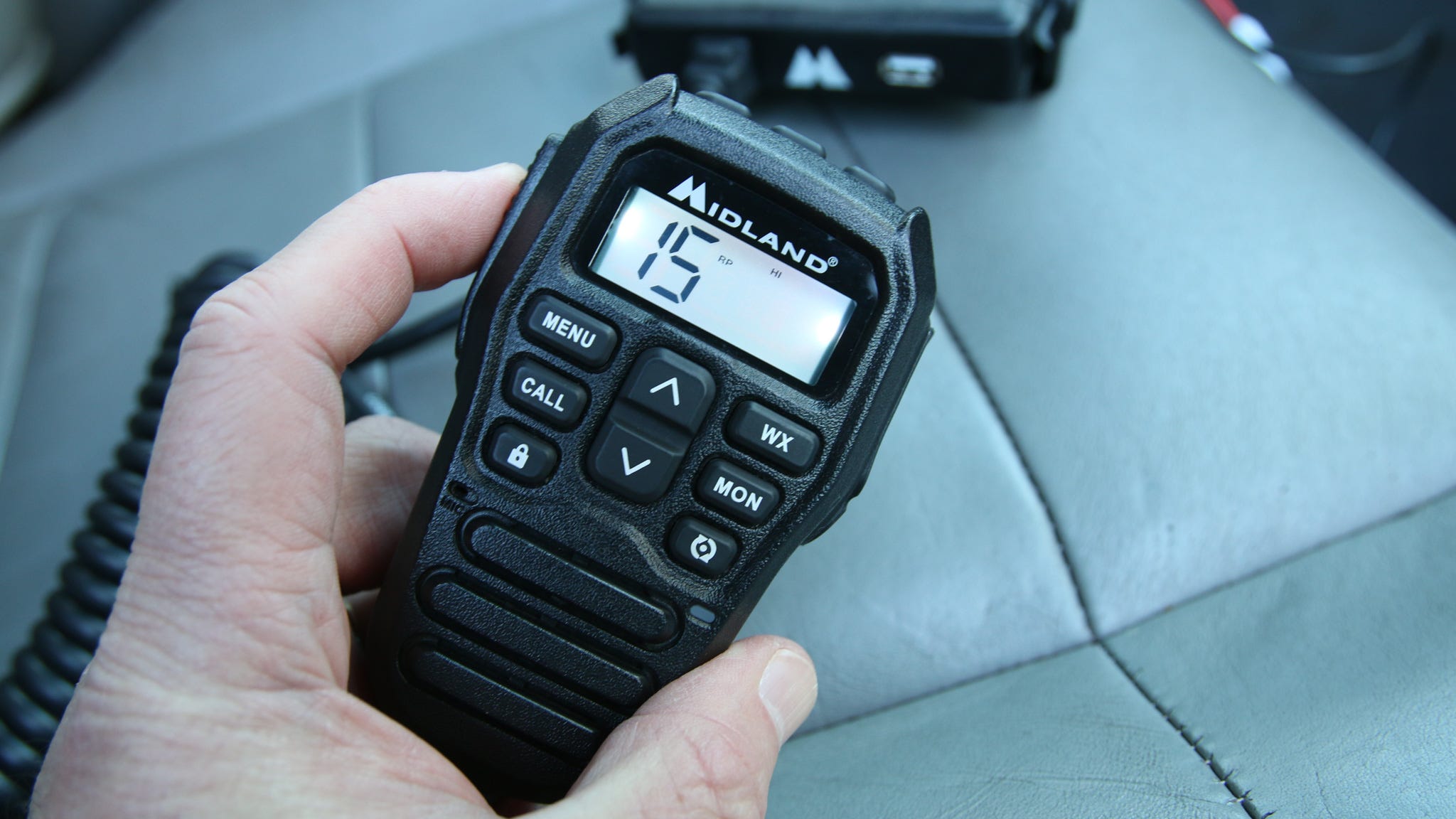
- Price: ~$399
- Type: GMRS mobile/base radio (license required)
- Power: 50W (tested at 49.4W actual output)
- Where to buy: Amazon, Midland USA, off-road/outdoor retailers
Midland built this for simplicity over feature depth, and that shows — the integrated control microphone means you can mount the radio body out of the way and just keep the mic where you need it, and reviewers consistently report clear, effective communication out to 10 miles even on low power. It doesn’t do multiple repeater banks or frequency scanning like the BTECH, which is either a limitation or a feature depending on how much complexity you want.
Pros: Excellent audio clarity, simple and reliable operation, integrated mic-mount flexibility, weather alerts and customizable backlighting
Cons: Pricier than the BTECH for similar core capability, lacks multi-repeater support and frequency scanning, some reviewers call it overpriced for the feature set
Collapse-Scenario Reasoning: If you want a “turn it on and it works” base station without wrestling with programming menus, this is the simpler alternative to the BTECH — you’re paying for ease of use rather than features. Rating: 4.0 / 5
9. Icom IC-7300 (High-End)
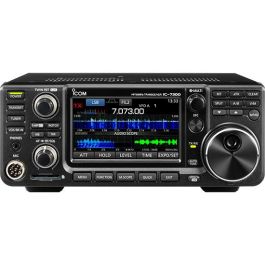
- Price: ~$940–$1,040 (frequently discounted from $1,500 list via rebates)
- Type: HF/50MHz all-mode transceiver, ham radio (general class license typically needed for HF privileges)
- Power: 100W
- Where to buy: GigaParts.com, HamRadio.com, DXEngineering.com
This is a completely different category from everything else on this list — HF means genuine long-distance, potentially worldwide communication that doesn’t depend on repeaters, cell towers, or line-of-sight at all. The direct RF sampling architecture and real-time spectrum scope make it remarkably capable for the price point relative to older-generation HF rigs, and the touchscreen interface is a big usability upgrade.
Pros: True long-distance/worldwide HF capability independent of all local infrastructure, excellent receiver performance, real-time spectrum scope, built-in antenna tuner
Cons: Expensive, requires a general class ham license and real operating knowledge, needs a proper HF antenna setup (not plug-and-play), fan noise reported by some users
Collapse-Scenario Reasoning: If your collapse plan includes needing to reach people far outside your local area — coordinating with family across state lines, or communicating when every local repeater and cell tower is down — this is the only device on this list that can genuinely do that. Rating: 4.7 / 5
OTHER OFF-GRID COMMUNICATIONS DEVICES
10. ZOLEO Satellite Communicator (Budget)
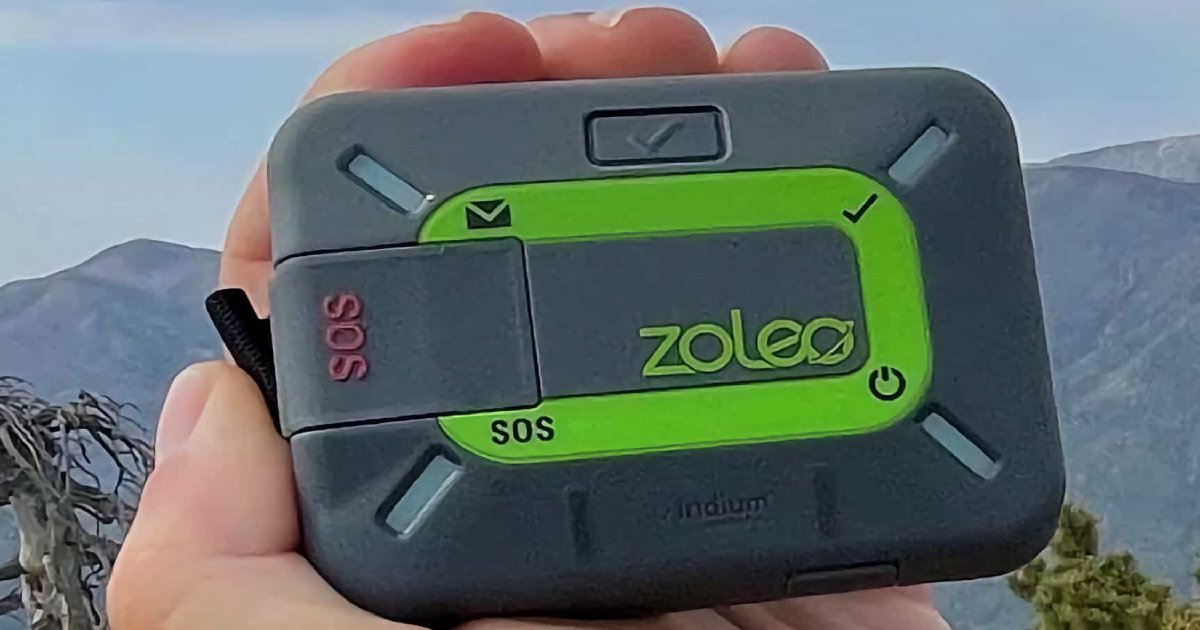
- Price: $149 device + $20/month minimum subscription
- Type: Satellite messenger (Iridium network), two-way SMS/email, requires paired smartphone for full functionality
- Battery: 200+ hours
- Where to buy: Amazon, ZOLEO.com
This is the most affordable entry into satellite messaging, and the tradeoff is clear — it leans heavily on your smartphone for the interface, so it’s not a fully standalone device the way the Garmin is. When it’s paired and working, though, it’s a genuinely reliable way to send an SOS or check in with family from completely off-grid, no-cell-service locations.
Pros: Lowest cost of entry into satellite messaging, IP68 rated, long battery life, dedicated SMS number
Cons: Requires a smartphone for full functionality (a real weak point if your phone fails or dies), no standalone navigation features, monthly subscription required
Collapse-Scenario Reasoning: A solid budget safety net if your phone still functions but has no signal — but be aware this device alone, without a working phone, has limited standalone usefulness compared to the Garmin below. Rating: 4.0 / 5
11. Garmin inReach Mini 2 (Mid/High-Tier)

- Price: ~$400 device + subscription (multiple tiers available)
- Type: Standalone satellite messenger (Iridium network) with GPS
- Weight: 3.5 oz
- Where to buy: Garmin.com, REI, Amazon, outdoor retailers
Unlike the ZOLEO, this genuinely works standalone — no phone required for basic two-way messaging, SOS, and navigation, though pairing with a phone app makes typing messages much easier. Battery life up to 30 days depending on tracking interval, and the SOS function connects to a real 24/7 emergency response center, not just a generic alert.
Pros: Fully standalone operation (doesn’t require a phone), up to 30-day battery life, real emergency response center dispatch, TracBack routing and navigation features
Cons: Small screen makes typing without a paired phone tedious, message delivery can be slow in bad weather, requires ongoing subscription
Collapse-Scenario Reasoning: The better choice over the ZOLEO if you need something that works independent of a functioning smartphone — a real consideration in a scenario where phones may be damaged, dead, or unreliable. Rating: 4.6 / 5
12. Starlink Mini (High-End)
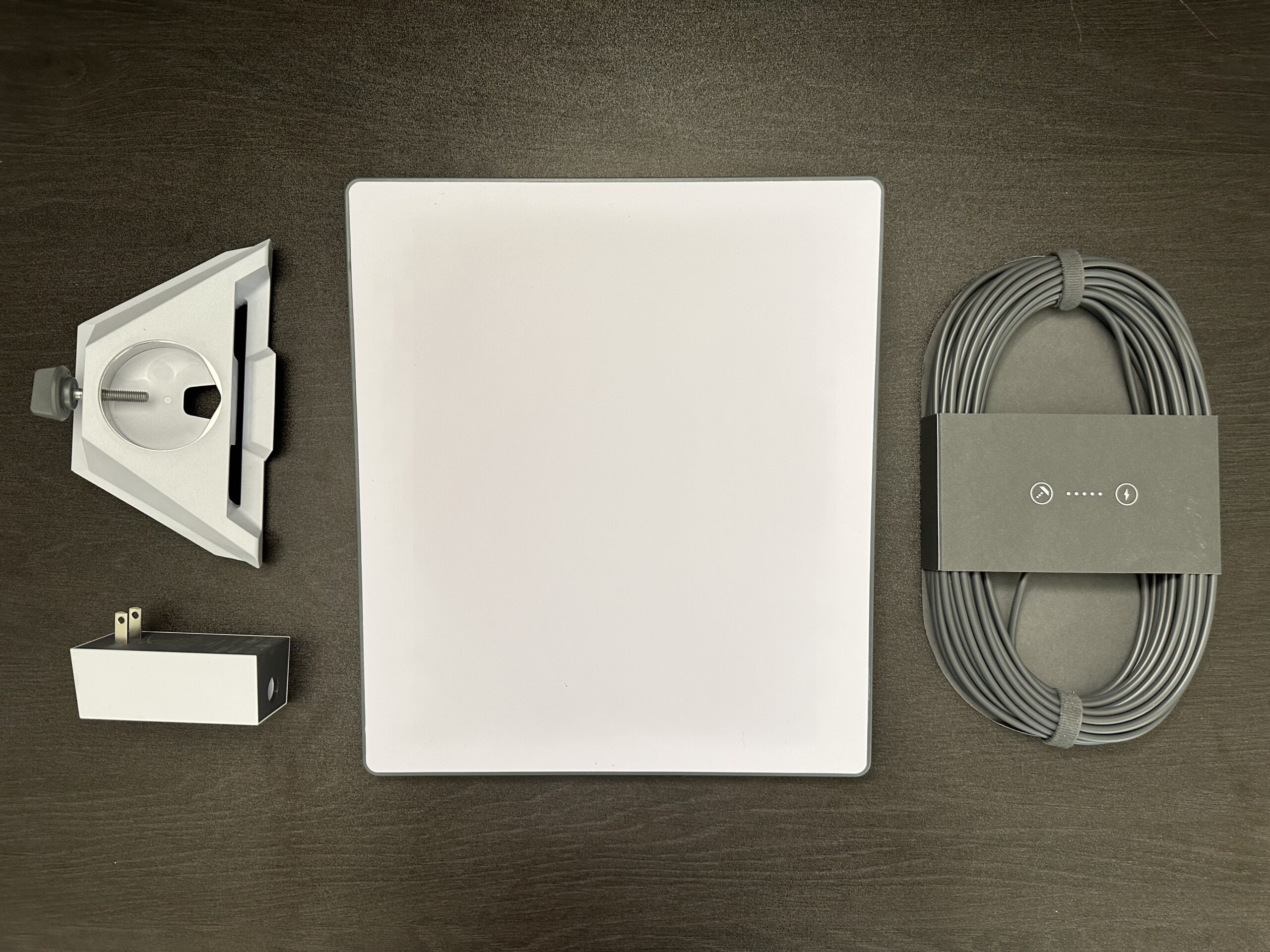
- Price: $199–$599 device (pricing fluctuates by promotion) + $7/month standby or $50+/month Roam data plans
- Type: Portable satellite internet terminal with built-in Wi-Fi
- Power: 20–30W draw, DC/AC/USB-C power options
- Where to buy: Starlink.com, Amazon, Best Buy
This is in a completely different league from everything else in this review — it’s not messaging or voice, it’s full internet access from anywhere with sky visibility, no cell towers or infrastructure required at all. Setup is genuinely simple: point it at open sky, power it on, connect to its Wi-Fi. Speed tests show up to 200-260 Mbps, which is enough to run VoIP calls, email, video, and real-time information access even when every terrestrial network is down.
Pros: Full internet access independent of all terrestrial infrastructure, fast speeds (up to 260 Mbps), simple setup, flexible power options, integrated Wi-Fi router
Cons: Expensive both upfront and ongoing, requires a power source (not purely battery-portable without extra gear), Wi-Fi range is limited by the compact integrated router, needs open sky view
Collapse-Scenario Reasoning: The most powerful — and most expensive — item on this entire list. If your plan includes needing full internet access (banking, news, coordinating with people who don’t have radios, video calls) rather than just messaging, this is genuinely unmatched by anything else here. Rating: 4.5 / 5
Quick Reference Table
| Device | Category | Price | Rating |
|---|---|---|---|
| Baofeng UV-5R | Handheld Radio | ~$25–$30 | 3.0 / 5 |
| BTECH GMRS-V2 | Handheld Radio | ~$60–$70 | 4.1 / 5 |
| Yaesu FT-5DR | Handheld Radio | ~$480 | 4.6 / 5 |
| Heltec V3 | Meshtastic | ~$25–$104 | 4.2 / 5 |
| LILYGO T-Beam | Meshtastic | ~$40 | 4.3 / 5 |
| RAK WisMesh Pocket V2 | Meshtastic | ~$99 | 4.6 / 5 |
| BTECH GMRS-50X1 | Base Station | ~$130–$150 | 4.3 / 5 |
| Midland MXT575 | Base Station | ~$399 | 4.0 / 5 |
| Icom IC-7300 | Base Station | ~$940–$1,040 | 4.7 / 5 |
| ZOLEO | Satellite Comms | $149 + subscription | 4.0 / 5 |
| Garmin inReach Mini 2 | Satellite Comms | ~$400 + subscription | 4.6 / 5 |
| Starlink Mini | Satellite Internet | $199–$599 + plan | 4.5 / 5 |
Bottom Line
Layer this the way I’d actually build it: a BTECH GMRS-V2 for every family member as the everyday handheld, a BTECH GMRS-50X1 or Midland MXT575 at home base and in the vehicle as the anchor station, RAK WisMesh Pocket V2 units for silent text-based coordination that doesn’t broadcast voice, a Garmin inReach Mini 2 as the standalone emergency-SOS safety net, and — if budget allows — the Icom IC-7300 for genuine long-distance HF capability and a Starlink Mini for full internet access when the rest of the grid is down. Get GMRS licensed (it’s cheap and covers the whole family); consider a technician ham license if the Yaesu or Icom are in your plan, since HF and advanced VHF/UHF privileges require it.
All prices reflect current retailer listings as of mid-2026 and fluctuate with sales — verify current pricing before purchase.