Backyard Chickens: The Collapse-Ready Household’s First Line of Food Security
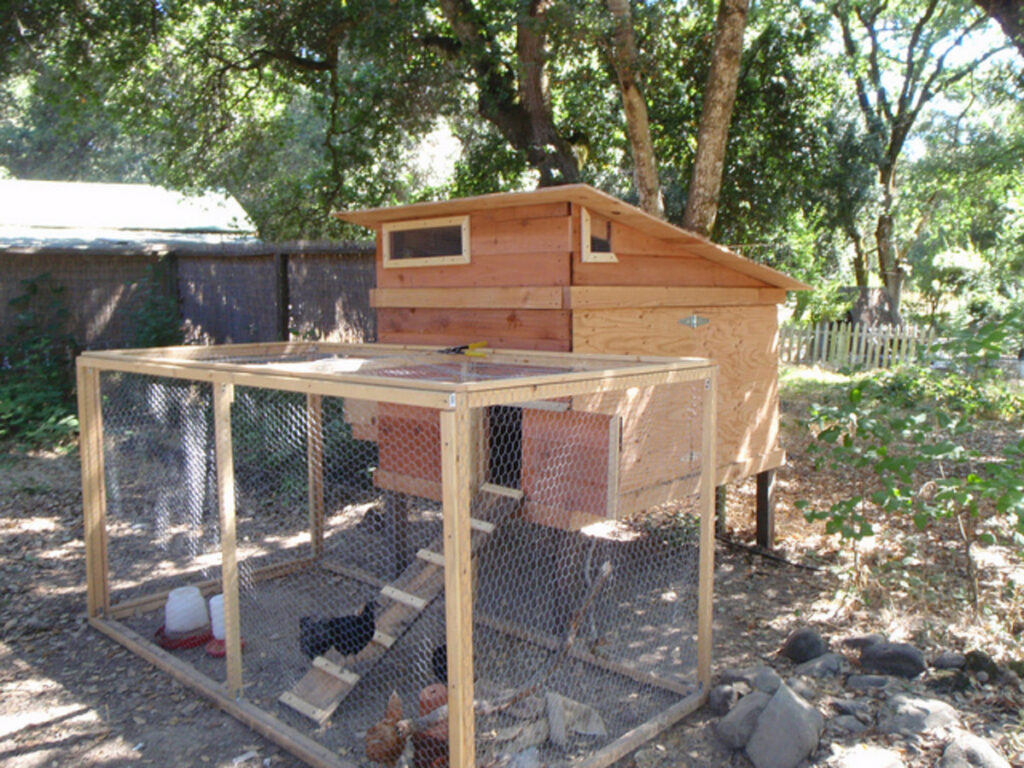
If I had to pick one single project to hand a family that is brand new to preparedness, it wouldn’t be a bug-out bag. It wouldn’t be a gun safe. It would be four to six laying hens in a coop in the backyard. After years of building out food security plans for my own household and consulting on dozens of others, chickens remain the single highest return-on-investment protein and calorie system a civilian can run without acreage, a tractor, or a homestead.
This article is a complete operational brief: why chickens matter, which breeds you want for eggs versus meat, how to keep them alive and productive, how to build a coop for 4-6 birds from scratch, what it costs, where to buy the birds and the materials, and how to feed them affordably — including DIY rations for when the feed store shelves are empty.
Why Backyard Chickens Are a Collapse-Ready Cornerstone
Chickens solve a problem that most preparedness plans ignore: sustained protein production without refrigeration, without ammunition, and without a supply chain. A stored case of freeze-dried eggs runs out. A dozen hens does not — it produces roughly 4 to 6 dozen eggs a week indefinitely, rain or shine, blackout or no blackout, as long as they have feed, water, and shelter. That is a self-renewing food system, and self-renewing systems are what separate a real preparedness posture from a stockpile that just delays the inevitable.
Beyond calories, chickens are a low-noise, low-signature operation. Unlike livestock that bawls, or firearms that announce your position for a mile, a small flock of hens is quiet, legal in the overwhelming majority of suburban and rural zoning codes (check your local ordinance for hen limits and rooster restrictions), and easy to conceal behind a privacy fence. They also convert kitchen scraps, garden waste, and bugs into eggs and eventually meat, which means they are closing a nutrient loop most households are currently just throwing in the trash.
There is also a resilience dividend that doesn’t show up on a spreadsheet: chickens teach a household the daily discipline of animal husbandry — feeding, watering, observation, and problem-solving — before the stakes are life-or-death. A family that has kept a flock alive through a hard winter has already built the muscle memory they’ll need if the grid goes down for good. That is worth more than any single piece of gear in your cache.
Finally, chickens scale. Four to six birds is the sweet spot for a suburban lot — enough eggs to feed a family of four with surplus to trade or barter, small enough that the coop footprint stays under most municipal restrictions, and small enough that the daily workload is measured in minutes, not hours. This article is built around that 4-6 bird baseline, but everything here scales up if you have the land for it.
Best Chicken Breeds for Eggs
If your primary objective is a steady, reliable egg supply, you want breeds that were purpose-bred for laying rate, cold and heat tolerance, and calm temperament around kids and other animals. Here are the breeds I recommend to every household starting a flock:
Rhode Island Red — The default answer for a reason. RIRs lay 250-300 large brown eggs a year, tolerate cold well, forage aggressively, and are tough enough to survive a novice keeper’s early mistakes. They are widely available and inexpensive.
White Leghorn — The commercial egg industry’s workhorse breed, and for good reason: Leghorns are the most efficient converters of feed to eggs of any breed, laying 280-320 white eggs annually. They are flighty and less cuddly than dual-purpose breeds, but if pure egg output per pound of feed is your metric, nothing beats them.
Australorp — A calm, cold-hardy Australian breed that holds the world record for eggs laid in a single year (364). Real-world production runs 250-300 eggs annually, and their docile temperament makes them excellent for families with children.
Plymouth Rock (Barred Rock) — A dual-purpose classic that lays 200-280 brown eggs a year while also finishing out as a respectable table bird if you need to cull. Extremely cold-hardy and a good all-around choice for a first flock.
Golden Comet / Sex-Link hybrids — Bred specifically for backyard egg production, these hybrids lay 250-320 eggs annually, mature fast, and are sexed at hatch (meaning no risk of an illegal rooster), which matters if your municipality bans roosters.
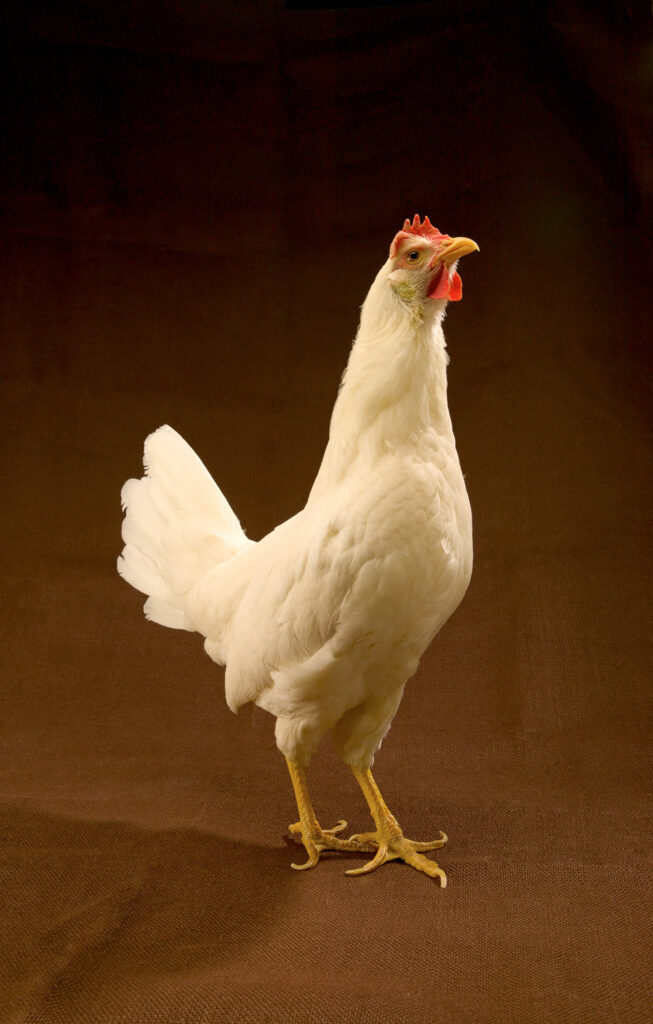
White Leghorn hen, a top egg-laying breed
Best Chicken Breeds for Meat
If your household wants to run a dual-track flock — layers for eggs and a rotating batch of birds raised specifically for the freezer — these are the breeds worth your money and pen space:
Cornish Cross (Cornish Rock) — The industry-standard meat bird, reaching 6-8 lb dressed weight in just 6-8 weeks. Nothing else comes close on feed-to-meat conversion or time-to-harvest. The tradeoff: they are bred for growth, not longevity, and are prone to leg and heart problems if kept much past 10 weeks, so this is a batch-raise-and-process breed, not a long-term flock member.
Freedom Ranger (Red Ranger) — A slower-growing alternative to Cornish Cross (10-12 weeks to harvest) that forages far more actively and holds up better outdoors on pasture. Slightly less breast meat than a Cornish Cross but a hardier bird for a rougher setup.
Jersey Giant — As the name implies, these are the largest standard chicken breed, with roosters reaching 13+ lbs. They grow slowly (5-6 months to full size) but are excellent dual-purpose birds that also lay a respectable number of brown eggs, making them a good choice if you want a self-sustaining flock rather than a batch-process operation.
Bresse (or Bresse-cross) — A premium French breed prized for meat quality and flavor, active foragers, dual-purpose with moderate egg laying. More expensive and harder to source but worth it if quality matters as much as quantity to you.
For most collapse-ready households, I recommend running a permanent flock of dual-purpose layers (Rhode Island Red, Australorp, Plymouth Rock) supplemented by seasonal batches of Cornish Cross raised specifically for the freezer — the layers give you sustainability, the Cornish Cross gives you an efficient meat harvest without depleting your breeding flock.
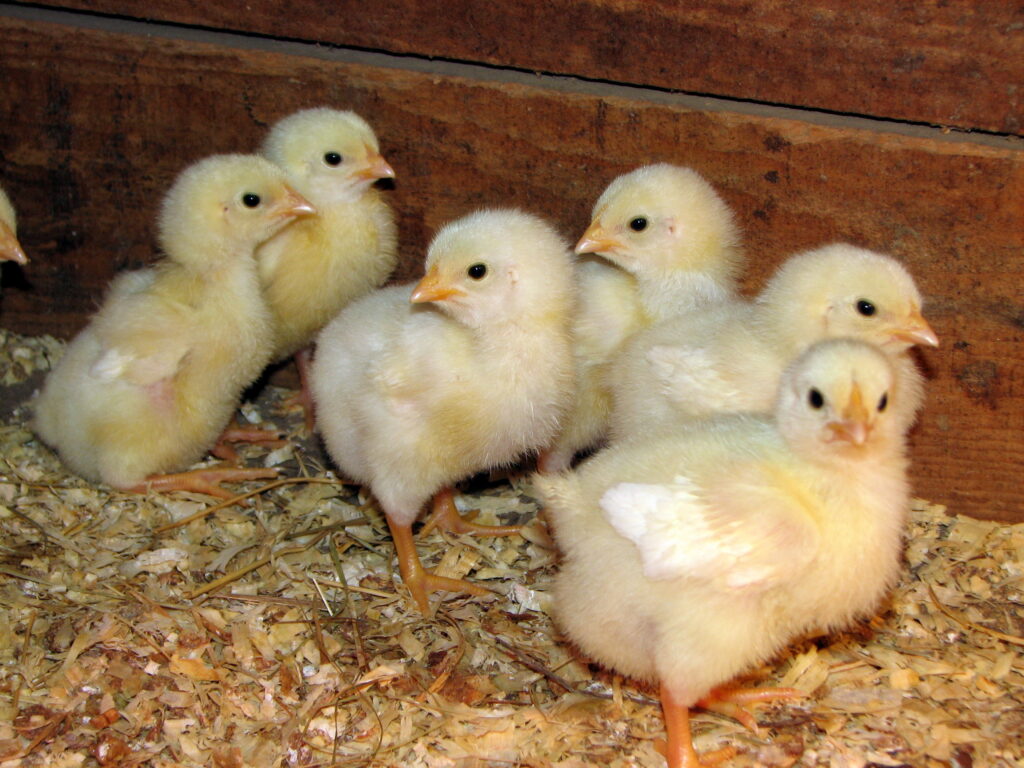
Cornish Rock broiler chicks, the standard meat breed
Core Chicken Care Practices
Keeping chickens alive and productive comes down to five fundamentals: shelter, feed, water, predator defense, and health monitoring.
Shelter needs to provide a minimum of 3-4 square feet of coop space per bird plus 8-10 square feet of run space per bird if they’re not free-ranging. Ventilation is critical — a sealed-up coop breeds ammonia buildup and respiratory disease faster than cold ever will. Chickens tolerate cold far better than heat and humidity, so prioritize airflow over insulation in most U.S. climates.
Feed needs to be age-appropriate: chicks need a 20-24% protein starter feed, growers transition to a 16-18% protein grower feed, and laying hens need a 16% protein layer feed with added calcium (crushed oyster shell) to support eggshell production. Never feed layer feed to chicks — the excess calcium damages young kidneys.
Water must be clean, unfrozen in winter, and always available — a hen that goes without water for even a few hours can stop laying for days. Budget for a heated waterer base if you’re in a freeze climate.
Predator defense is the single biggest killer of backyard flocks. Raccoons, hawks, foxes, and neighborhood dogs will all test your coop. Hardware cloth (never chicken wire, which predators tear through easily) buried 12 inches deep around the run perimeter, secure latches that raccoons can’t manipulate, and an automatic coop door that closes at dusk are the three upgrades that will save you the most birds.
Health monitoring is a five-minute-a-day habit: check for lethargy, unusual droppings, respiratory sounds, mites (check under wings and around the vent), and injuries. Isolate any sick bird immediately — flock diseases spread fast in close quarters, and a $15 quarantine dog crate can save your entire investment.
Rotate your run area or use a deep-litter method (adding fresh straw over droppings and letting it compost in place) to manage parasite load and odor. A well-run coop should not smell bad — if it does, you have a ventilation or litter management problem to fix immediately.
How-To: Building a Chicken Coop for 4-6 Birds
This is a straightforward weekend build for anyone with basic carpentry skills and a circular saw. The design below is a raised coop (2 ft off the ground on legs) with an attached run, sized for 4-6 standard layers.
Step 1 — Foundation and framing. Build a 4 ft x 4 ft floor frame using 2×4 lumber, then attach 4 corner legs (4×4 posts) raising the coop floor 24 inches off the ground. The elevation keeps the coop dry, gives the birds shaded space underneath, and makes it much harder for predators to dig in.
Step 2 — Floor and walls. Sheath the floor frame with 1/2 inch plywood. Frame the walls at 4 ft tall on the back and 5 ft tall on the front for a sloped shed roof. Sheath walls with plywood, leaving a screened vent gap of at least 1 sq ft near the roof line on two opposite walls for cross-ventilation.
Step 3 — Roof. Frame a simple sloped shed roof extending 6-8 inches past the walls on all sides to shed rain away from the structure. Cover with plywood and roofing felt/shingles or a corrugated metal panel — metal roofing is cheap, durable, and shrugs off decades of weather.
Step 4 — Nesting boxes. Build three 12x12x12 inch nesting boxes along one exterior wall, accessible via a hinged lid from outside for easy egg collection. Line with straw or pine shavings. One box per 2-3 hens is plenty.
Step 5 — Roosting bars. Install 2×4 roosting bars (rounded edge up) inside the coop, 18-24 inches off the coop floor, providing 8-10 inches of bar length per bird. Chickens instinctively want to sleep elevated — this keeps them off the floor and out of their own droppings.
Step 6 — Access door and ramp. Cut a 12×12 inch pop-door in the coop wall with a sliding or hinged door, and build a ramp with wood cleats down to run level so the birds can walk in and out.
Step 7 — The run. Frame an 8 ft x 8 ft run attached to the coop using 2×4 lumber, and skin the entire structure — walls AND roof — in 1/2 inch hardware cloth, not chicken wire. Bury the bottom edge of the hardware cloth 12 inches into a trench around the perimeter to stop digging predators.
Step 8 — Human access door and latches. Install a full-size human access door into the run for cleaning and a secure human-height door into the coop itself for maintenance. Use carabiners or raccoon-proof latches on every access point — raccoons can operate simple hook latches.
Chicken Coop Materials List
- (4) 4x4x8 pressure-treated posts (legs)
- (12) 2x4x8 framing lumber
- (3) sheets 1/2 inch plywood (4×8)
- (1) roll roofing felt or (6) corrugated metal roofing panels
- (1) box 3 inch deck screws
- (50 ft) 1/2 inch hardware cloth, 4 ft wide
- (2) hinges + latches for coop door and nesting box lids
- (1) hinged human door with hardware for the run
- Roofing nails/screws as needed
- Exterior wood screws and construction adhesive
- Exterior paint or wood sealant (optional but recommended for longevity)
Chicken Coop Basic Price Breakdown
| Item | Estimated Cost |
| Framing lumber (posts + 2x4s) | $110 – $150 |
| Plywood (3 sheets) | $90 – $120 |
| Roofing (metal panels or shingles) | $60 – $100 |
| Hardware cloth (50 ft roll) | $90 – $130 |
| Hinges, latches, screws, fasteners | $40 – $60 |
| Paint/sealant | $30 – $50 |
| Total (DIY build) | $420 – $610 |
| Pre-built comparable coop (retail) | $600 – $1,500+ |
Building from scratch typically saves 30-50% versus a comparable pre-built coop, and you end up with a sturdier structure since you control the lumber grade and hardware quality.
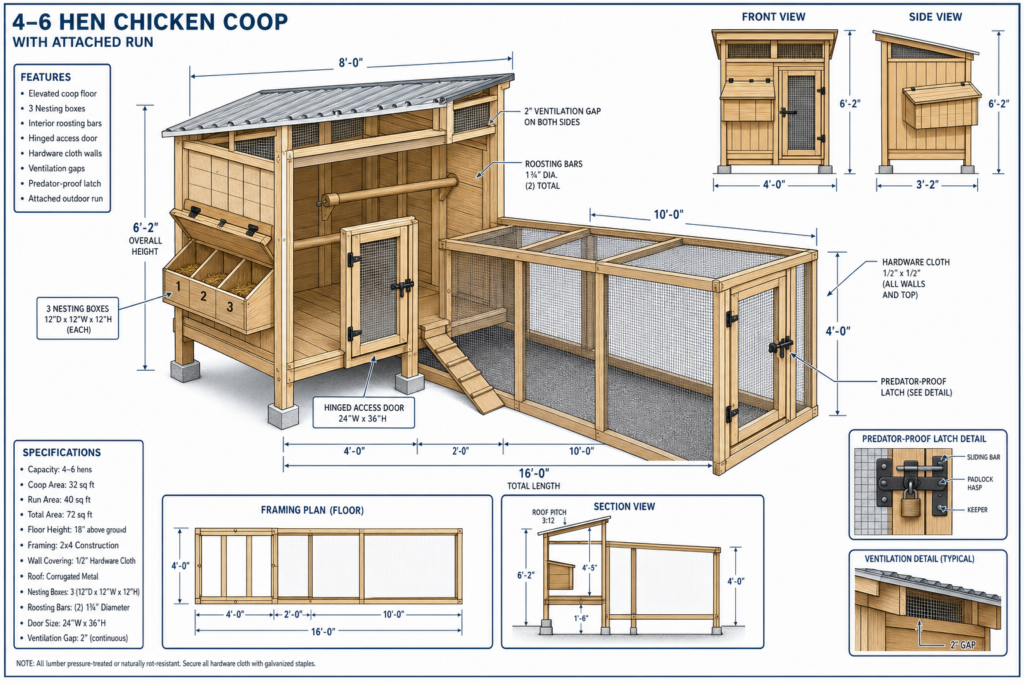
Chicken coop construction blueprint for 4-6 birds
Where to Buy Chickens and Coop Supplies
Live chickens: Tractor Supply Co. runs seasonal “Chick Days” (typically February through April) selling day-old chicks by breed for $3-6 each with a small minimum purchase (usually 3-6 bird) towards the end of Tractor Supply’s “Chick Days” they will put the bird on sale for $.50-$1.00 per bird though selection and breed will be very limited.
Rural King and local feed stores run similar seasonal chick sales. For started pullets (already laying or close to it) or rarer breeds, local hatcheries and breeders found through the Poultry Show Central directory or local Facebook homesteading groups are your best bet. Mail-order hatcheries like Murray McMurray Hatchery and Meyer Hatchery ship day-old chicks nationwide with minimum order requirements (usually 15-25 chicks to maintain body heat in transit) — good for larger builds or splitting an order with neighbors.
Coop-building supplies: Tractor Supply, Lowe’s, and Home Depot all stock the lumber, hardware cloth, and hinges you need. Hardware cloth specifically is often cheaper and higher quality at a farm supply store (Tractor Supply, Rural King) than a big-box hardware store. Amazon is a solid source for coop hardware kits, predator-proof latches, automatic coop door openers ($60-150), and heated waterer bases.
Pre-built coops (if you’d rather buy than build): Tractor Supply, Lowe’s, and Amazon all carry pre-fabricated coops in the 4-6 bird size range, generally $400-900 for a decent quality unit.
Feed Costs and Sourcing
A standard layer will eat roughly 1/4 lb of feed per day, meaning a flock of 5 hens consumes about 1.25 lbs/day, or roughly 38 lbs a month. A 50 lb bag of quality layer feed runs $18-28 depending on brand and whether it’s organic/non-GMO. That puts monthly feed costs for a 5-bird flock at roughly $14-22, or $170-260 a year — genuinely one of the cheapest protein sources you can run.
Where to source feed: Tractor Supply, Rural King, and local feed/farm stores are your primary sources and typically beat big-box or online pricing once you factor in shipping weight on 50 lb bags. Buying in bulk (multiple bags at once) often unlocks a discount, and many feed stores offer loyalty programs or bulk pricing for repeat customers.
DIY and Emergency Chicken Feed
When the feed store shelves are empty or you want to cut costs, chickens are remarkably adaptable omnivores. A workable DIY ration combines:
- Scratch grains — cracked corn, wheat, oats, or barley (homegrown or purchased in bulk from a feed mill) for roughly 50% of the diet
- Protein source — mealworms (easy to farm at home in a bin), earthworms, or kitchen scraps like eggshells (crushed, fed back for calcium), meat scraps, or fish scraps
- Greens and garden waste — vegetable trimmings, garden thinnings, weeds like dandelion and clover, and excess produce
- Grit — small stones or commercial poultry grit, essential for digestion since chickens have no teeth and need grit in their gizzard to grind feed
- Calcium supplement — crushed oyster shell or your own baked and crushed eggshells, critical for hens laying daily
A flock that free-ranges even part of the day on a reasonable-sized lot will cut purchased feed needs by 20-30%, since they’re actively hunting bugs, seeds, and greens on their own. This is worth factoring into your post-collapse planning: a flock with access to pasture and kitchen scrap supplementation can survive on drastically reduced purchased feed if the supply chain breaks down, making chickens one of the most resilient food systems a household can maintain independent of outside inputs.
Bottom Line
Backyard chickens deliver an outsized return for a modest investment: roughly $400-600 to build a solid coop, $15-30 per bird to stock it, and $15-25 a month to feed a 4-6 bird flock — in exchange for a self-renewing supply of high-quality protein that keeps producing through blackouts, supply chain disruptions, and economic downturns. If you’re building a Collapse Ready Household from the ground up, this is where you start.
When Systems Fail — We Don’t.