Mountain House Freeze-Dried Meals
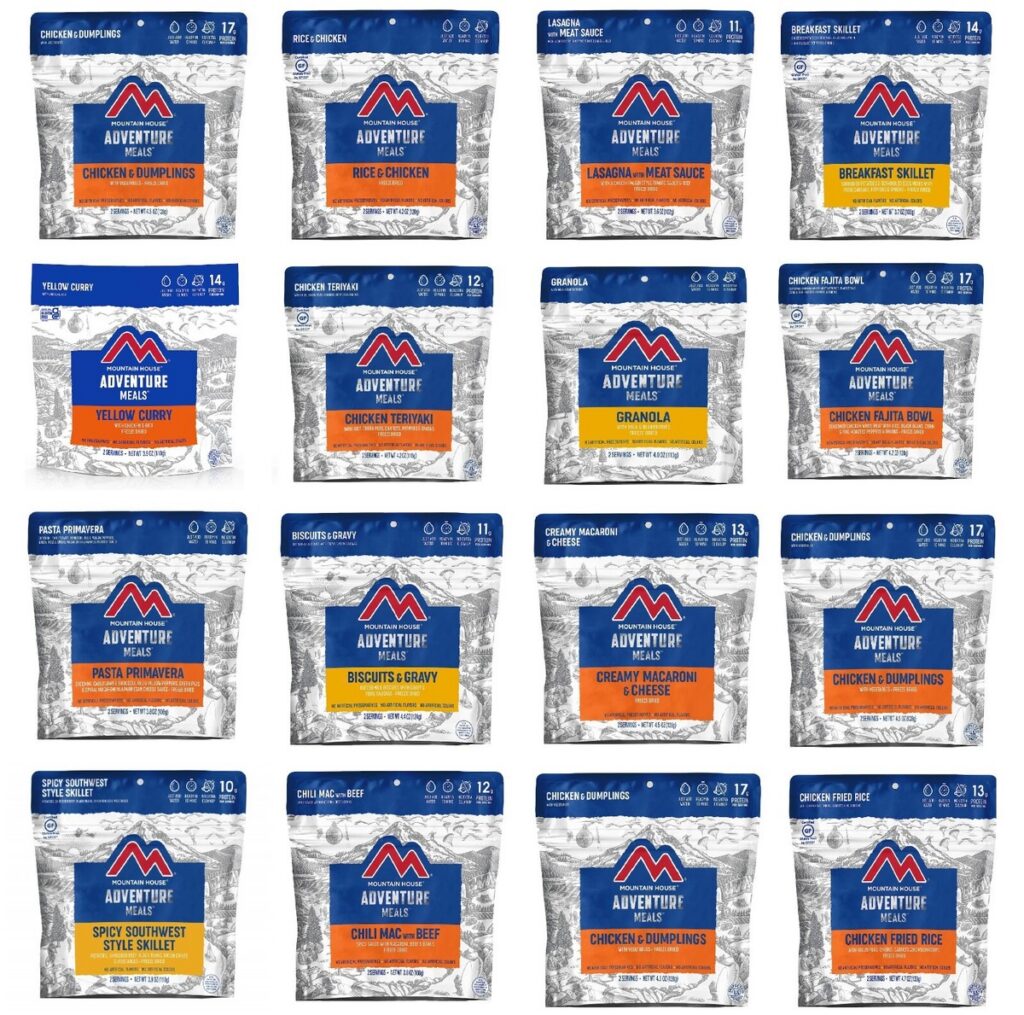
If you’ve spent any time around preppers, backpackers, or combat rations, you already know the name. Mountain House has been the benchmark for freeze-dried food since Oregon Freeze Dry started supplying LRRP rations to Army long-range recon teams in Vietnam. Fifty-plus years later, it’s the brand every other freeze-dried meal gets compared against — for better and worse.
I’ve eaten Mountain House in the field, in a tent at 9,000 feet, and out of a bucket in my own basement during a “practice run” week where my family ate nothing but stored food. Here’s the unfiltered breakdown.
Meal Lineup
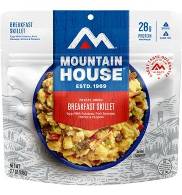
Breakfasts — Breakfast Skillet, Biscuits & Gravy, Granola with Blueberries & Milk, Scrambled Eggs with Bacon. These are genuinely good — the Breakfast Skillet in particular punches above its weight with real sausage crumbles and hash browns.
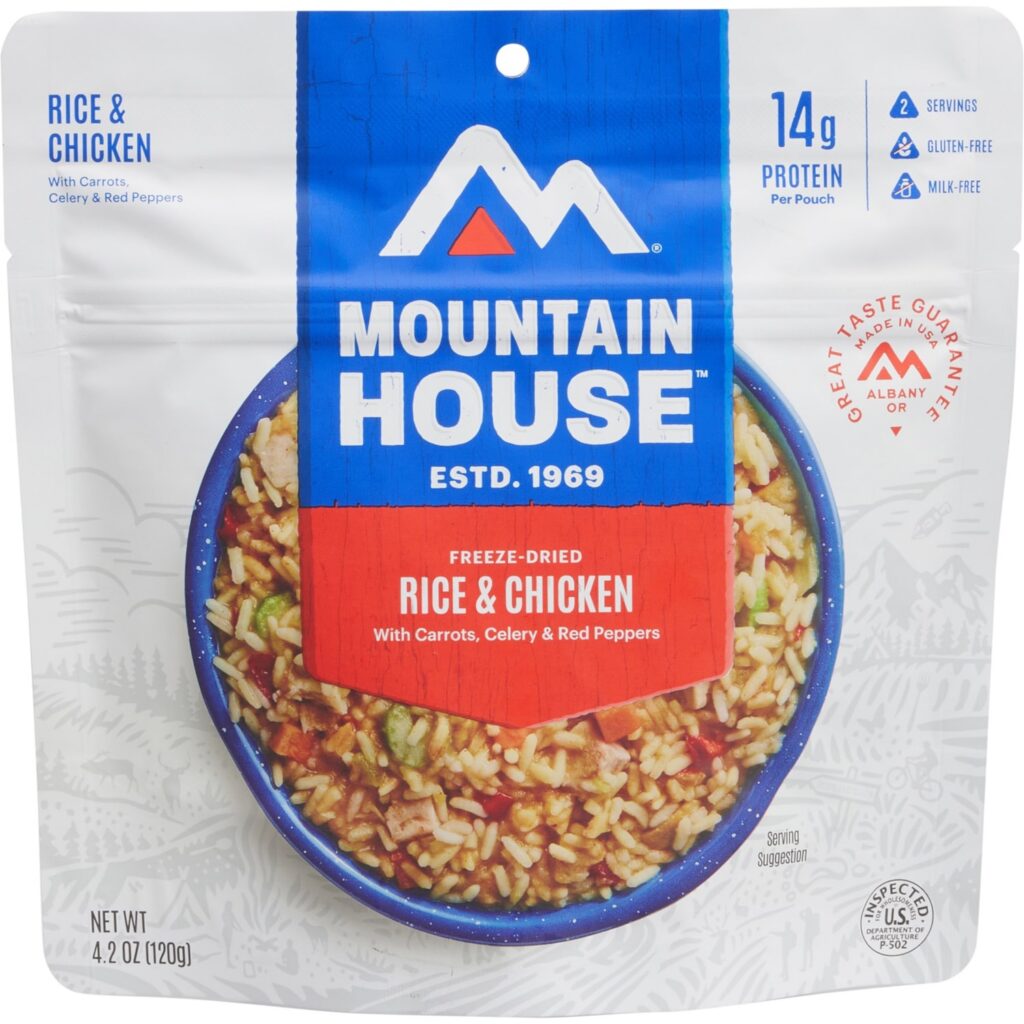
Lunches/Entrées — Chicken & Rice, Beef Stroganoff, Chili Mac, Pasta Primavera. Portioned as single-serving pouches or multi-serving pouches depending on the line.
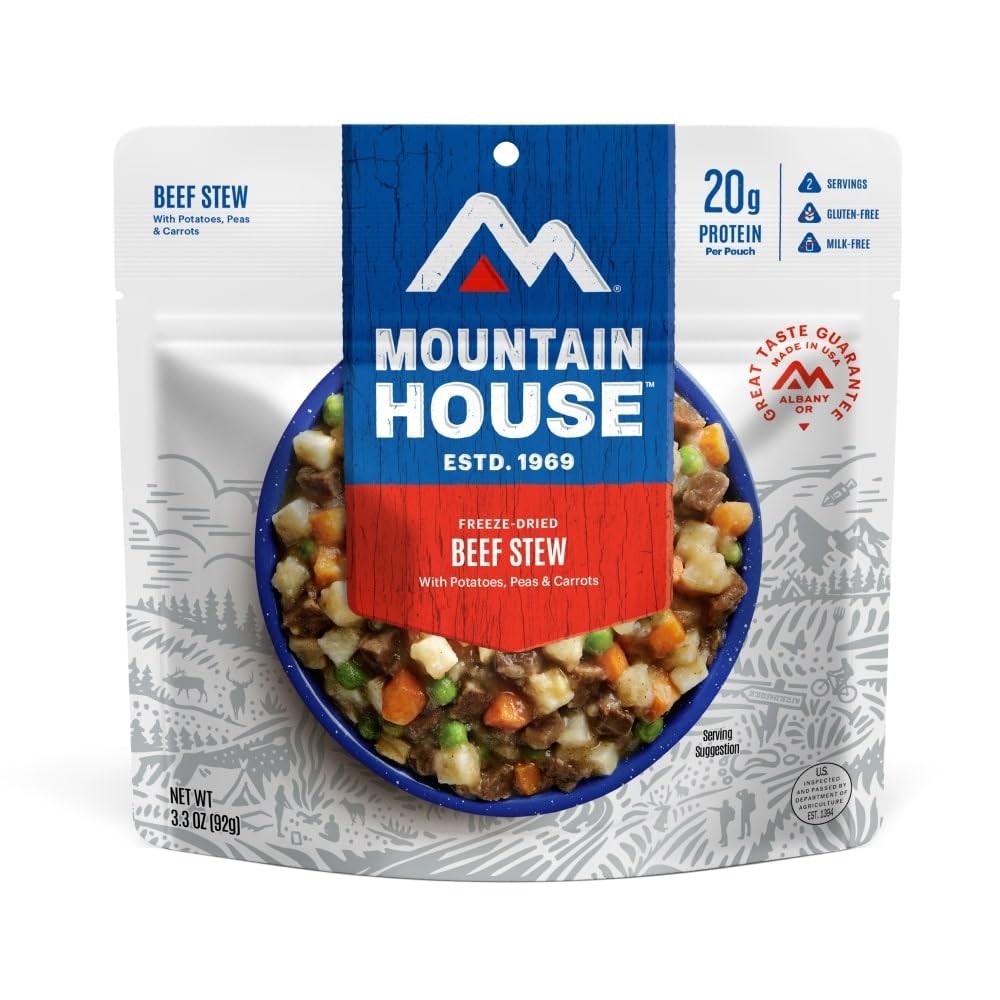
Dinners — Beef Stew, Lasagna with Meat Sauce, Chicken Teriyaki with Rice, Spaghetti with Meat Sauce. These are the heaviest-calorie, most filling options and the ones I’d stack deepest for a long-term pantry.
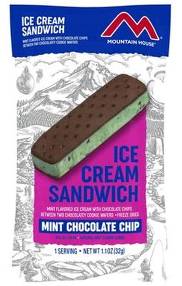
Desserts & Sides — Ice cream (yes, really), cheesecake, rice & pinto beans, corn.
Cost Per Unit
| Format | Servings | Typical Price | Cost Per Serving |
|---|---|---|---|
| Single pouch (2-serving, e.g. Breakfast Skillet) | 2 | $9.50–$13.00 | ~$4.75–$6.50 |
| Classic Assortment Bucket | 24 | ~$90–$110 | ~$4.00–$4.60 |
| Expedition/Emergency Assortment Bucket | 30 | ~$120–$150 | ~$4.50–$5.00 |
| #10 Can (single entrée, bulk) | 8–10 | $55–$130 depending on menu | ~$6.50–$13.00 |
Reality check: Mountain House is not the cheapest calorie-per-dollar option on the market — it’s priced as a premium product, and it eats like one. If you’re building a deep pantry on a budget, blend it with rice, beans, and cheaper bulk freeze-dried brands, and reserve Mountain House pouches for the meals people will actually be happy to eat during a bad week.
Storage & Long-Term Suitability
- Shelf life: Pouches rated 30 years unopened; #10 cans backed by the same 30-year taste guarantee.
- Packaging: Foil-laminate pouches are lightweight, compact, and rodent-resistant when sealed — but vulnerable to punctures. #10 cans are stackable, crush-proof, and far more resilient for basement/root cellar storage.
- Footprint: Pouches are the best strength-to-weight ratio in the freeze-dried category — ideal for bug-out bags. Cans are bulkier but stack cleanly on shelving for a static cache.
- Prep requirement: Needs potable water and ideally boiling water for full rehydration time (~10 minutes). In a true grid-down scenario, factor in fuel/water budget — this is not a “eat straight from the pouch” ration like an MRE.
Collapse-Scenario Fit
Mountain House shines as the comfort layer of a prepared pantry — the meals that keep morale up during a long grid-down stretch, not the meals you grab first when you’re moving on foot with no water source. Pair it with a water filtration plan and a way to boil water, and it’s an excellent mid-to-long-term food security layer. For a true no-water, no-heat bug-out scenario, MREs (see our separate MRE review) are the better format.
Where to Buy
- MountainHouse.com — full catalog, subscribe-and-save option, best for #10 cans
- Amazon, Walmart, REI — fastest shipping, frequent sales
- Sportsman’s Warehouse, Cabela’s/Bass Pro, local outdoor retailers — good for in-person inspection before bulk buying
- Safecastle — solid source for bulk #10 can cases
Rating: 4.6 / 5
Pros: Best taste-to-shelf-life ratio in the category, extremely long shelf life, wide meal variety, trusted 50+ year track record, easy to rotate into normal camping use.
Cons: Premium pricing requires water and heat to prep; pouches are less rugged than cans for long-term storage.
MRE’s Reviewed: Civilian-Market vs. Genuine Military Surplus
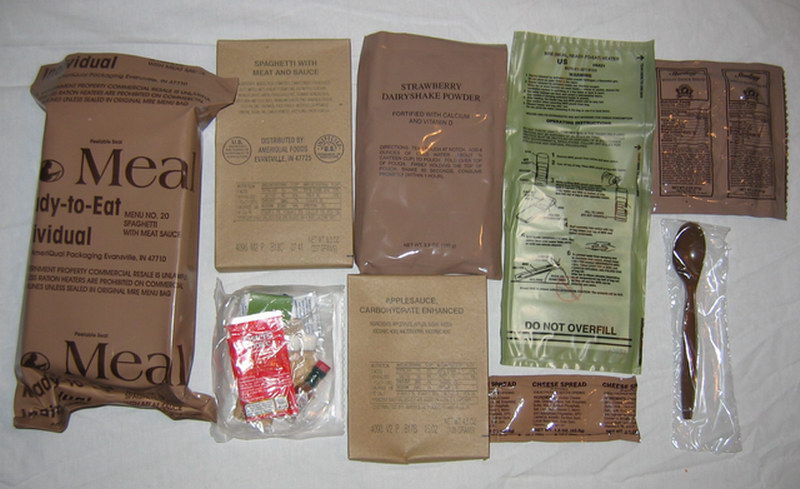
MREs (Meals Ready to Eat) are the gold standard for “grab and go, no water, no heat required” field rations. But the market has split into two very different products wearing the same name, and knowing the difference matters before you buy a pallet.
Civilian-Market MREs (MRE Star, Sopakco, etc.)
These are made by the same contractors (Sopakco, Ameriqual, Wornick) that supply the Department of Defense, built to the same MIL-SPEC standards, but packaged and sold directly to the public — never issued to troops.
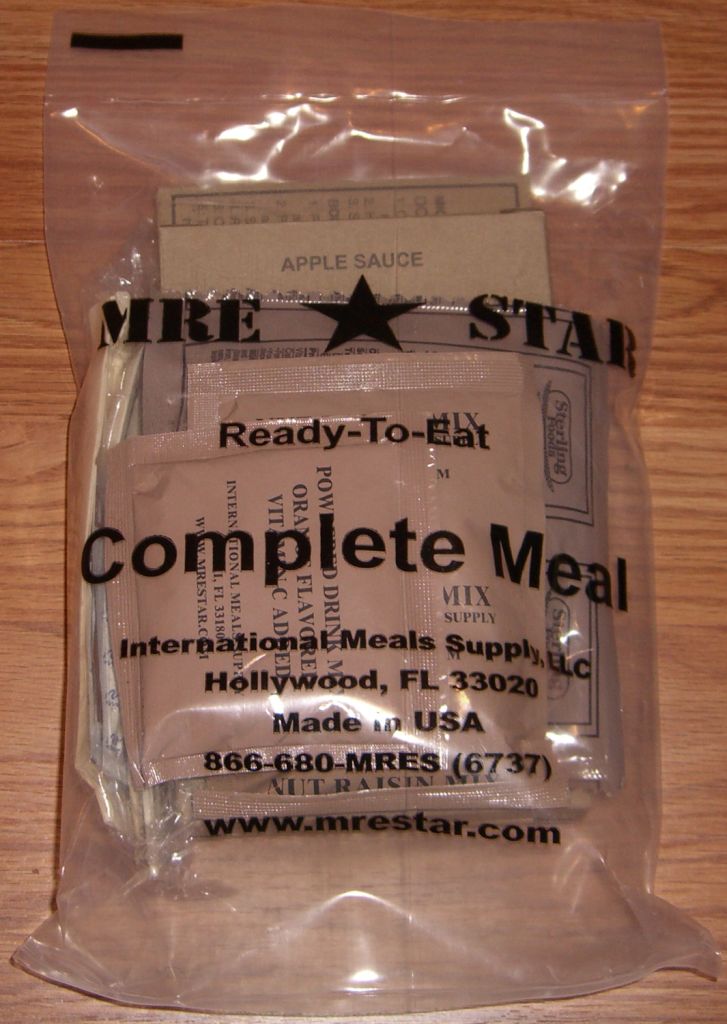
What you get: Entrée, starch/side, cracker or bread, spread, dessert, drink mix, flameless ration heater (FRH), utensil/accessory pack. ~1,200–1,300 calories per meal.
Cost per unit: Case of 12 runs $130–$180 (~$11–$15/meal). Shelf life 3–5 years properly stored (cool, <75°F).
Where to buy: MREStar.com, MorePrepared.com, SOS Products, Amazon — always sold fresh with recent pack dates, consistent quality control, replaceable heaters.
Genuine Military Surplus MREs
These are actual government-contract meals — sometimes near-current production diverted through surplus channels, sometimes older stock nearing or past its “inspect by” date.
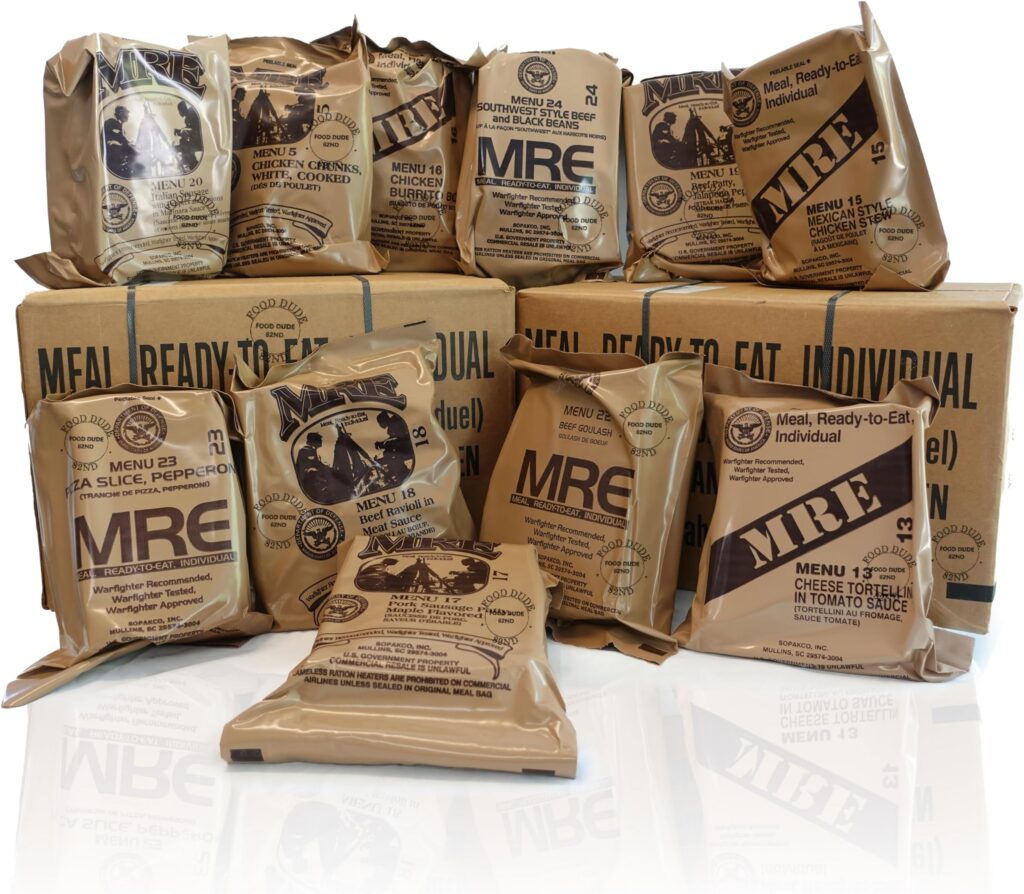
What you get: Same components as civilian MREs, occasionally with genuine military packaging/case markings and current-issue menus not sold retail.
Cost per unit: Case (A&B, ~24 meals) runs $65–$270 depending on freshness and inspection date — averaging $5.50–$11/meal, often cheaper than civilian-market cases when bought from a reputable surplus dealer.
Legality: 100% legal to buy and own as a civilian in the U.S. — the “inspect-by” date is not an expiration date, and government-surplus MREs are routinely resold once past their federal shelf-life window. Do NOT buy from anonymous eBay sellers reboxing expired stock as “fresh” — stick to known surplus dealers with clear inspection dates and photos.
Where to buy: AmmoCanMan.com (veteran-owned, publishes current inspection dates), Amazon storefronts specializing in military surplus, army surplus stores, gun shows. Avoid anonymous marketplace listings with no visible inspection date.
Cost & Storage Comparison
| Type | Price/Case | Cost/Meal | Shelf Life | Consistency |
|---|---|---|---|---|
| Civilian MRE (MRE Star) | $130–$180 (12ct) | $11–$15 | 3–5 yrs | Very high, always fresh |
| Military Surplus MRE | $65–$270 (24ct) | $5.50–$11 | Varies, often 1–5 yrs remaining | Variable — vet the seller |
Storage & Collapse-Scenario Fit
- No water, no heat required — the single biggest advantage over freeze-dried food. Eat cold straight from the pouch if needed.
- Rugged retort packaging survives rough handling, vehicle storage, and bug-out bag abuse far better than a freeze-dried pouch.
- Heavier and bulkier per calorie than freeze-dried — not ideal for a multi-week static pantry, but unmatched for a 72-hour bag, vehicle kit, or bug-out scenario where cooking isn’t guaranteed.
- Rotate stock — treat the “inspect by” date as your rotation trigger, not a hard expiration. Store below 75°F for max longevity.
Rating
- Civilian MRE (MRE Star): 4.4 / 5 — Pros: consistent freshness, reliable heaters, easy reorder. Cons: pricier per meal, heavier calorie-for-calorie than freeze-dried.
- Genuine Military Surplus MRE: 4.0 / 5 — Pros: often cheapest per-meal option, authentic components, great bulk value from trusted sellers. Cons: quality/freshness varies by lot, requires due diligence on the seller.
Complete Emergency Food Kits Reviewed: My Patriot Supply vs. ReadyWise
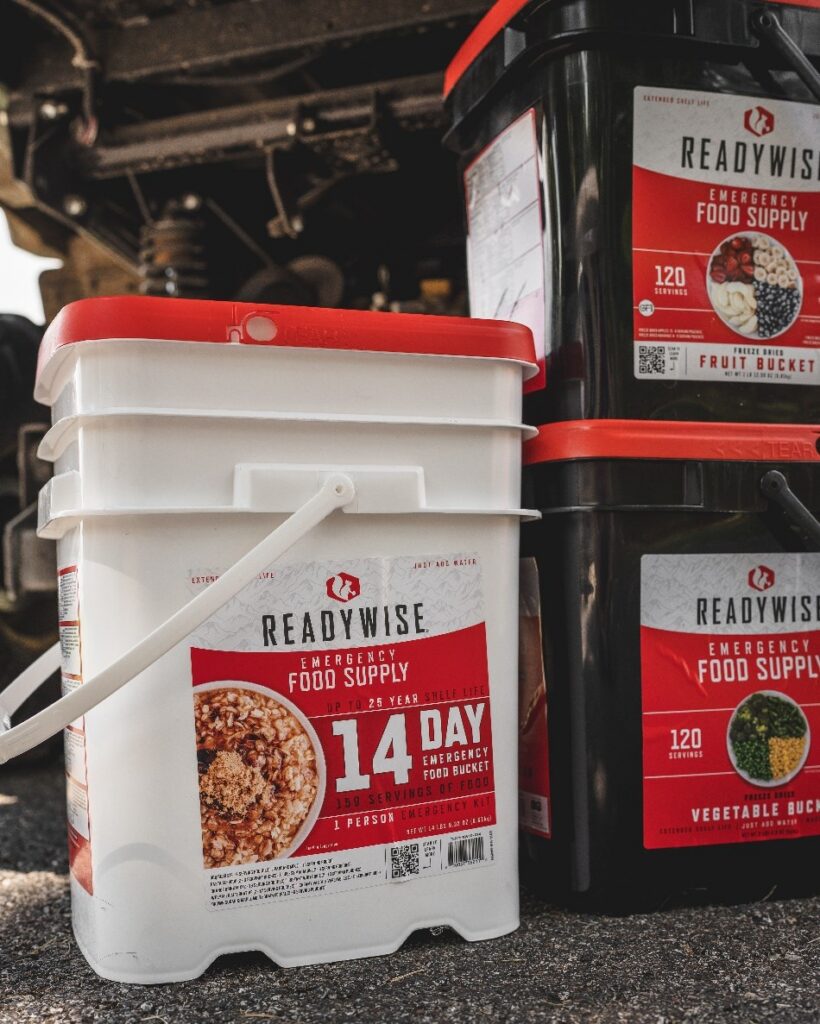
For readers who don’t want to hand-build a pantry meal-by-meal, the pre-packaged kit companies exist to solve exactly that problem: order one box (or a pallet of buckets), and you’ve got weeks-to-months of shelf-stable calories sitting in your garage. I’ve bought and rotated stock from both of the market leaders below — here’s how they stack up.
My Patriot Supply
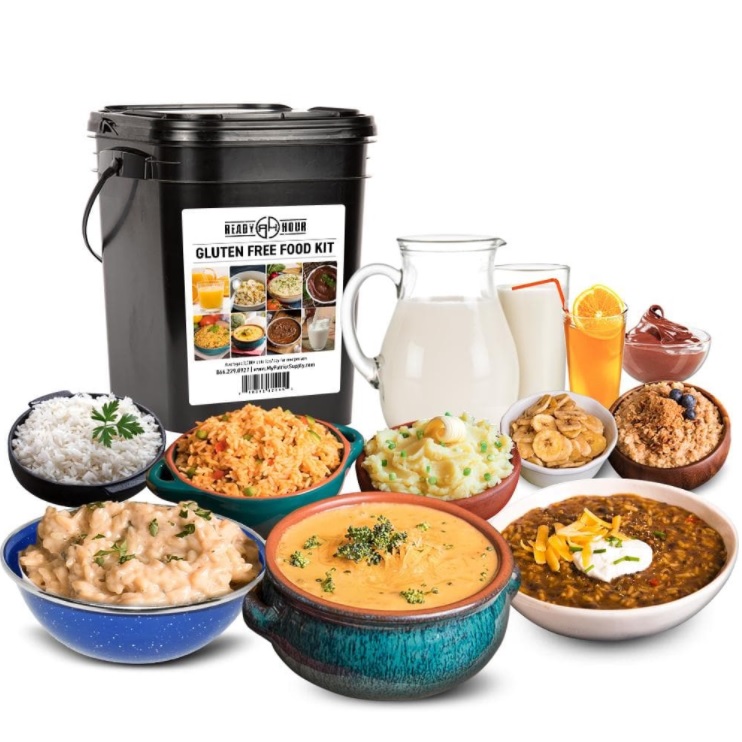
My Patriot Supply is the most heavily marketed name in the space, built around a “prepper-to-prepper” brand identity. Their bread-and-butter product is the 4-Week Emergency Food Supply — 250 servings, 16 varieties, 2,000+ calories/day for one person.
| Kit | Servings | Price | Cost/Day (1 person) |
|---|---|---|---|
| 4-Week Emergency Food Supply | 250 | ~$219.99 | ~$7.85 |
| MEGA 4-Week Food & Protein Supply | 27 varieties | 449.95(oftendiscountedfrom 623) | ~$16.07 |
| 72-Hour Food Kit | Short-term | ~$30–$40 | Varies |
Shelf life: Up to 25 years. Packed in Mylar pouches inside stackable plastic buckets.
Where to buy: MyPatriotSupply.com direct — they also run frequent bundle/BOGO promotions worth waiting for.
ReadyWise (formerly Wise Company)
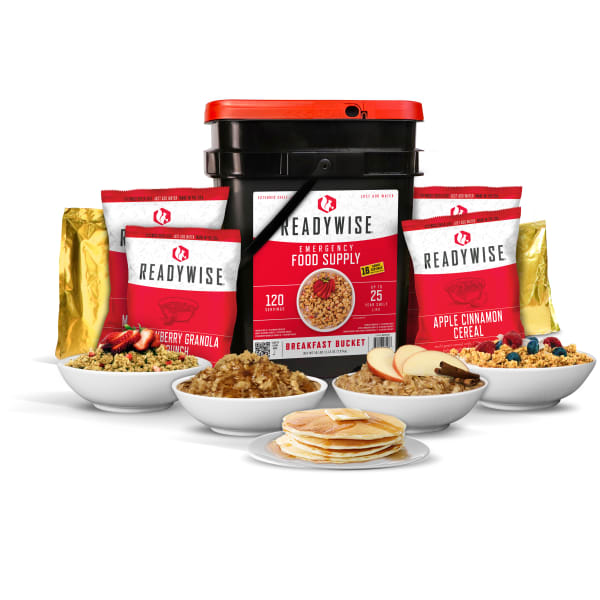
ReadyWise leans into a broader product range — from single grab-bags to full-year bucket systems — and has strong vegetarian/allergen-aware options, useful if you’re stocking for family members with dietary restrictions.
| Kit | Servings | Price | Cost/Day (1 person) |
|---|---|---|---|
| One Week Emergency Food Supply (Grab Bag) | ~7 days, 13,920 cal | $129.99 | ~$18.57 |
| 30-Day Emergency Food Supply | 296 servings | $219.99 | ~$7.33 |
| Entrée & Breakfast Supply (120-day, veg) | 240 servings | Varies (~$200–$260) | ~$1.70–$2.20/meal |
| 1-Year Emergency Food Supply | 24 buckets, 2,000+ cal/day | $3,359.88 | ~$9.20 |
Shelf life: Up to 25 years, Mylar pouches in stackable crush-resistant buckets.
Where to buy: ReadyWise.com direct, Amazon, Costco (seasonal), Emergencykits.com.
Cost, Storage, and Collapse-Scenario Analysis
- Cost per day per person across both brands lands in the $7–$18/day range depending on kit size — bulk/longer-duration kits are meaningfully cheaper per day than small grab-bags.
- Storage: Buckets are the single best format for basement/garage long-term storage — stackable, rodent-resistant, and far more durable than loose boxes of pouches. This is the format I’d recommend for a static home cache; it’s not built for bug-out portability (too bulky/heavy per bucket).
- Nutrition: Most kits are carb-heavy (rice, pasta, oat-based) with modest protein — supplement with canned meat, freeze-dried protein add-ons, or your own game/livestock plan if you’re building for more than a few weeks.
- Collapse-scenario fit: These kits are purpose-built for the “bug-in, ride it out at home” scenario — a genuine grid-down, supply-chain-failure event where you need weeks-to-months of calories without relying on retail restock. They are not a bug-out solution; MREs and freeze-dried pouches are the better format for that.
- Water dependency: Like Mountain House, virtually all kit meals require water to rehydrate — factor a water storage/filtration plan into your overall plan, not just the food.
Rating
- My Patriot Supply: 4.3 / 5 — Pros: strong brand trust, frequent deals, simple one-and-done buying. Cons: premium pricing on smaller/specialty kits, heavy marketing upsells at checkout.
- ReadyWise: 4.2 / 5 — Pros: wide range of kit sizes, strong allergen/vegetarian options, good bulk value on 30-day+ kits. Cons: small grab-bag kits are the weakest value in the category, meals lean vegetarian/carb-heavy overall.
Emergency Food Comparison: Mountain House vs. MREs vs. Complete Kits
Quick-reference chart
| Category | Cost / Meal or Serving | Shelf Life | Water/Heat Needed? | Weight/Portability | Best Use Case | Rating |
| Mountain House (pouches) | ~$4.75–$6.50 | 30 years | Yes — hot water required | Lightest, best for bug-out bags | Morale meals, backpacking, mid/long-term pantry | 4.6 / 5 |
| Mountain House (#10 cans) | ~$6.50–$13.00 | 30 years | Yes — hot water required | Bulky but stackable | Static home/basement pantry | 4.6 / 5 |
| Civilian MRE (MRE Star) | ~$11–$15 | 3–5 years | No — eat cold or use included heater | Heavy/bulky per calorie, very rugged | Bug-out bag, vehicle kit, no-water scenarios | 4.4 / 5 |
| Military Surplus MRE | ~$5.50–$11 | Varies, 1–5 yrs remaining | No — eat cold or use included heater | Heavy/bulky per calorie, very rugged | Bulk bug-out stock, budget-conscious buyers who vet sellers | 4.0 / 5 |
| My Patriot Supply Kit | ~$7.85–$16 per day | 25 years | Yes — hot water required | Bulky buckets, not portable | Home base-layer pantry, simple one-time purchase | 4.3 / 5 |
| ReadyWise Kit | ~$7.33–$18.57 per day | 25 years | Yes — hot water required | Bulky buckets, not portable | Home base-layer pantry, dietary-restriction households | 4.2 / 5 |
How to Read This Chart
- Lowest cost per meal: Genuine military surplus MREs, when bought from a vetted seller with a clear inspection date.
- Longest shelf life: Mountain House and the bucket-based kits (25–30 years) beat MREs by a wide margin.
- Best for movement/bug-out: MREs — no water or heat dependency.
- Best for a static home cache: Mountain House #10 cans or a bucket-based kit (My Patriot Supply/ReadyWise) — stackable, rodent-resistant, built for shelf storage.
- Best overall taste: Mountain House, by a clear margin.
Bottom line: No single category covers every collapse scenario. The strongest food security plan layers all three — Mountain House for morale and taste, MREs (civilian or surplus) for the bug-out bag and vehicle kit, and a bucket-based kit for the static home base-layer.
Note: pricing reflects current retailer listings as of mid-2026 and fluctuates with promotions — readers should verify live pricing before purchase.